Sunday, February 24, 2019

Coming Soon...

Homunculus
Aleksandar Prokopiev
Translated from the Macedonian by Will Firth


Thursday, February 21, 2019

Coming Soon...

Enticement
by Pema Tseden 
Edited and Translated from the Tibetan/Chinese by Patricia Schiaffini-Vedani, Michael Monhart, Francoise Robin and Carl Robertson


Trudging, Sailing, Soaring

Aviaries starts with a diary entry from December 20, 2011; two days after the death of Václav Havel. From the very beginning, we're aware that we're diving into an ordinary world but seen with dubious perception.1 The central character Alžběta (Běta) lives in a basement of an apartment complex. Her mind wandering in and out of reality and with no job to keep her occupied, she busies herself dealing with memories and daily formalities of an ordinary Czech life—In this regard, Aviaries is not an apolitical work but it deals with it in a subtle way. The atmosphere is predictable and unsatisfying to Běta and she senses a new rule of life has become dominant while her daughter lives off the dumpsters. Běta keeps her rituals: visiting offices for possible vacancy and psychiatrist, for she's thrown into the kaleidoscope world very often evoking distant memories and times but also branching into the unreal world; her complex figments. Her whims are sometimes churned into technical details but again boil down to the sense of being alone.2

1.       Something is happening. Something's in the air. Something isn't right.

2.       I'd like to hear a human voice, I'd like so much for someone to sit next to sit down next to me again, but everyone here is scrolling through their phones, diving masks over their eyes and mute butterfly nets over their mouths. 


Monologues, snippets from newspaper, conversations and wordplay that appear under diary entries or separate headings dilute the narrative, bring randomness to the structure but still add to the reflection of Běta, who is in the middle of seamlessly blended bleak, literal and phantasmagorical world around her.  As she tries to establish connection between events and changes, some truth3 bobs up on its own and things shuffle like a deck of cards, such that an instant, object or memory reappears in flashes. The projected world at times seems to be coming from the psychological complex of Běta and other characters: Alice, Nadia, Běta's Mother, Melda, merely painted with her ideas; but all share a dreamy world. The world is as such: everybody has lost the essence and become objectified, and the only pleasure they derive is from their imagination and retention, meanwhile Běta evolves to become more vigilant4 but obscure.5

3.       "Nobody ever gets used to a constant feeling of injustice, not the nation, not a city, not even the private individual. Never gets used to it, never makes peace with it, but merely brings the anger down to a simmer, becomes small and sour, silent and sad, starts to slouch and loses hope. Small and sour, slouching and sad, silent and hopeless was the city of Prague…"

4.       Time drove me on, spurred me on with kurbash and scourge, whistling and whooping cheerfully until after fifty-four years it drove me with its spurs into a rather ordinary, spacious pen sown with desiccated grasses of the present. But what kind of pen was it, here amid complete desolation with no sign of a fence anywhere that would enclose this monstrously symmetrical space, festering like the bottom of an old well?

5.       In another time and place this was image of you, Alice. You're already dissolving, receding, changing, thinning, waning into the distance, and yet it's as if someone has burned the image into the back of my brain. Where am I going?

Běta's visions are humane but her grasp of reality is still misty and we cannot map the other world9, if such thing exists, since everything flows into one6, not rambling but sharp awareness. While reading, sometimes we feel like being transported from one percept and time to another, seeking connection but the dreams roll in, infringing or rather expanding into grandeur construct of the mind7. Meanwhile, as she has to face the almost disrupted8 and pitiful world every day, amid the surge of barren news, Běta feels lack of her daughter Alice's presence, which brings back past moments they shared and she tries to contain within herself those dearest to her heart.

6.       "Don't forget the recollection is always a reconstruction, never a reproduction."

7.       "You're a sieve, Běta,  just a sieve merely sifting through other people's identities"

8.       Prague reflects off the river. And so it is here twofold — while I can barely endure the one… Awareness, and yet a remarkable emptiness, for all these props — and even my speech is a prop — are just an accretion of completely empty squares.

9.       I pulled out a broken light bulb from my purse, held it right in front of my eyes, and gazed at the snapped filament for a long time. It contained the entire world — reptiles, brains, black pucks, ropes, dumpsters, Madrid streets full of people, blood-soaked rags, El Greco, and Goya.

The novella is surreal and hallucinatory often with same markers and ideas repeated, mostly toward the end, as if the world is in a trap or moving in circles, or in a vortex of dreams and reality. The story unfolds into mothers and daughters, lifting the idea of mother being inside a daughter. Clocks, snakes, a human-tree, stolen paintings, Bob Dylan, Infant Jesus, eternal waiting rooms — the work demands to be read with patience, and multiple readings is even better. Aviaries is a blend of motherhood, loneliness, psychological insights and horror, political dislocations and the human urge to be tied together.

Author: Zuzana Brabcová
Translator: Tereza Novická
Page Count: 132pp
Price: $16

Copy Courtesy: Twisted Spoon Press

Under the Lady Liberty

While the German fleet is advancing toward the coast of Manhattan with many successes behind them already, the little man (Adolf Hitler) determined to take his revenge, aboard one of the ships, commands his army to bring Charlie Chaplin to him, who made fun of him in his movie The Great Dictator. Now all set with the plan to attack as they land on the American soil, the little man wants an orchestra to play Wagner for him and very soon his army brings the famous comedian to the ship for torture, the little man has decided for him. In other time and part of the world, precisely in France in the 1880s, a man named Olivier Legrand gives up his job in the mine drifts and starts working as a stevedore in a port in his desire to do something valuable. This is the same time when The Statue of Liberty was being unassembled and loaded into a ship to take it to America. And one morning, just in time, Olivier, as a stowaway for America, finds a suitable cradle in the crown of the Lady Liberty; and starts his crooked-all-the-way voyage for a new life. 


In this alternate history, 'the little man' Adolf pulls off the fingernails of Chaplin in what is called the Marco Polo code, and his men do the same to Pablo Picasso, preventing him to complete Guernica. The two lives – of Chaplin and Olivier – and two stories run parallelly, with few commonalities and seem connected though separated by time. The Nazis have conquered all of Europe and have landed on America too, and as the story unfolds, while the German fleet captures Manhattan, taking city and the streets under control, Chaplin escapes through the porthole of the cellar and is rescued by an old man – hunchbacked Olivier; the two parallel stories converge in an unlikely fate. The little man has ordered to play Wagner incessantly throughout the newly conquered city of New York, meanwhile Chaplin, who was beaten and injured by the Nazis, gets care of the old Olivier, who already has the responsibility of taking care of his bedridden wife and who sneaking under the eyes of the German soldiers gets Chaplin a typewriter on his request – to quench his thirst for writing another theatre play… In the culmination of the novel, we witness – a silent cinema, rather in dark – an insomniac Adolf fighting almost tramp-turned Chaplin, with a result that has never happened, yet that we are curious to know.

Cano takes smallest details from the world history and turns it into both ironic and horrendous sequence. Especially, the frenzy mindset of the little man, already a victor of the war, and who is still compulsive to take personal revenge with Chaplin for his portrayal in The Great Dictator, brings wonderment. In agreement with the story, Cano convinces us how lives can connect and be shaped and gently fuses the dark and the light with candid narrative full of lyricism. Blade of Light carries the sentiments and thoughts of gentle folks who lived during the war, the impulse of the artists fighting on their ground and the cruelty of the dictator suffered with his own mania – Blade of Light is something born out of ordinary and extraordinary characters and stories we're close to witness!

Author: Harkaitz Cano
Translator: Amaia Gabantxo
Publisher: Centre for Basque Studies, University of Nevada
Page Count: 96pp
Price: $19.95

Author Photo Credit: https://commons.wikimedia.org/wiki/File:Harkaitz_Cano_2014.jpg
Review Copy Courtesy: Centre for Basque Studies, University of Nevada

Earthly Secrets!

Guiomar, a schoolgirl from Audierna, with hesitation goes to Mastrina Xaoven's house in the old quarter of Plugufan for Klavia classes, and she is offered that Mastrina will tell her a story in exchange for her dedication to learning the Klavia. In the background we sense that pertaining to historical segregation of Brun/Malluma community and Gwende people, demeanor for Brun people is still undignified. The story follows alternation between Guiomar accounting her visits to Mastrina's house and her personal affairs, and Mastrina telling the story to Guiomar in those visits. 1

1.       "I want to propose a deal: we'll divide your class time into two parts. If you invest a minimum amount of efforts in learning to play the Klavia, I'll tell you a story – a good one, too. It's about a girl just like you, perhaps a tiny bit older. It begins on the days went to one of those clubs in the nabrallos. I think you'll like it."


The story is about a Gwende girl Attica, nearly of Guiomar's age. In her disguised visit to Bragunde's decrepit quarters to take part in a concert where popular hicupé music is overwhelming she befriends a Malluma boy Fuco, who claims to be a firewalker, after they outwit the SAN agents. Fuco, takes her with him to meet Onga, a witch living in a cemetry, to know the riddle behind the Bragunde being plagued by scorpions on the street. Onga's revelation in her crypt, and a hint from a woman at the bar—from where Attica, caught by rebels, manages to free herself—draw their route to Morvane Tower, which as per the legend, where the entrance to the underworld of Nigrofe is situated. After another revelation by Onga and hearing Cecillio, a blind healer, about the Tartarus and the forthcoming evil in the land of Bragunde and Nigrofe—outcome of the disruption of balance between good and evil, when a sacred tree was uprooted, Attica and Fuco venture into a new journey into the Green Country, the underworld of Nigrofe.2 This makes the first part of the novel.


2.       "The subteran cult is based on balance," continued Onga. "The Malluma race professes the faith of its ancestors, which claims equality in the scales between good and evil. The balance is reflected in its two sacrred symbols: Dendria, the peach tree, represented good, while to Tartarus fell the mission of embodying evil, death that lies in wait, conscious of its victory, death. These two symbols lived side by side in Nigrofe, their balance maintained by the priests of Venquita Monastery."

The second part, Nigrofe, largely contains an adventurous tale of Attica and Fuco, who land in the fantastical and magical world full of hunters, thieves, mythical creatures, scorpions, rugged mountains, forests, friends and a powerful being called Birdman rolling the dies. And they must use gold and a peach stone to stop the evil before it is too late, finding their way to the Venquita—where captain Touro, the ruling colonel of Nigrofe has imprisoned all the women—where they are supposed to make brothers Dinis and Vinicius power-up their obelisk before knowing all the secrets for the demonic unraveling of the Tartarus, but what Attica and Fuco are told by Onga and Cecillio isn't enough!

"Newspaper and magazine cuttings, photocopies from encyclopaedias, adverts,…" put as if chapter headings provide a comic-strip dimension to the story uplifting the realm of fiction. The invented names (I suppose), particularly coined for the story, for which a glossary is provided at the end, is a playful approach to create parallel coexisting fictional world: Hicupé feels like the Jazz of the modern world. Mastrina tells the story with "One Thousand and One Nights" kind of cliffhangers that makes all the secrets coming together near the end all the more interesting, as far as that the novel ends in an episode leaving behind a trail for a sequel.

Tartarus is an adventurous tale of clash and harmony between good and evil and an audacious tale of little saviors of the world. 

Author: Antonio Manuel Fraga
Translator: Jonathan Dunne
Publisher: Small Stations Press
Page Count: 227
Price: $ 7.30

Tuesday, February 12, 2019

Coming Soon...

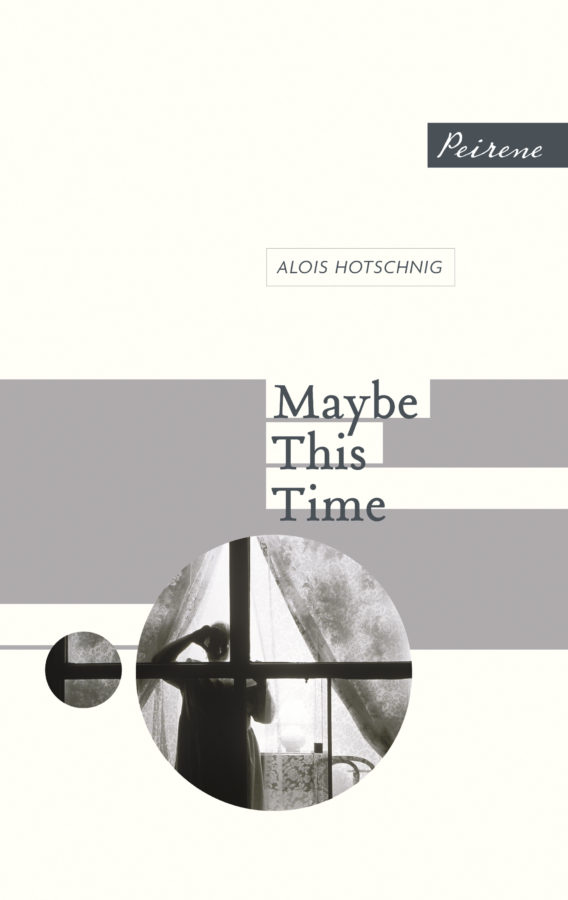
Maybe This Time
by Alois Hotschnig
Translated from the Austrian German by Tess Lewis


Maybe This Time

Metamorphosis of Earth


One Million Cows puts together eighteen stories by Manuel Rivas, one of the best known and translated author from Spain writing in Galician. These stories, narration ranging from personal accounts to magic like encounters are often short but well crafted.


In the opening story First Love a man meets his former love who wants to go on a foreign trip. My Cousin, The Gigantic Robot is recounted by a small boy who thinks his cousin Dombodan, who rarely speaks, is a robot. The character Dambodan appears in one another story One Of Those Guys Who Come From Far Away when he's offended in a hangout and finally speaks. In Solitary Sailor, after a heavy storm, a humble living dead shipwrecked sailor appears in a bar for a beer. A man is haunted with fish-attack who's on board with five Irishmen in A Match With The Irishman. A suicide is taken far-off for a Christian burial led by an old man in The Lame Horse's Road. In The Englishman a young man after his return from England turns his home into a luxury town with a golf course. Other stories include A father whose love of peace is in danger; A son who receives an unexpected letter from home; An electoral candidate talks about his encounter with a woman who has fish scales; An old woman in conversation with her unlikely driver; A jazz band who's nothing good to play to appease the audience; University teacher who's fond of a country-mill is fooled; A provincial artist who's invited to the capital Madrid where art is unstable; An imaginary friend Tom befriends a little girl; An old woman calls at the telephone exchange for his infantry son to come home; Friends meeting on Sunday talking mundane things, and A girl who has many things to say about her cows. Well, it's clear that there are stories from everywhere, for everyone—places vs places, places vs men and men vs men.

Subtle transformation is one of the key themes to all these stories. Descriptions are prudent that frame the stories, and set the perfect tone, such that we find ourselves merged with the texture of sentences which are organic to storytelling—chunks of merriment. 1,2

1. With the car going at a man's pace, I realized how much the track revealed its entrails of gravel and mud. In the delayed panorama, the eyes followed the line of electric's fences, drawn from time to time, in the ditch, to the rusty remains of domestic appliances or, on the horizon, to scraggy, discoloured scarecrows and cows that looked as if they'd been waiting for that moment for centuries. 

2. In its reckless convulsion, the sea vomited on the sand a frontier of remains, the sticky enchantment of seaweed, stateless sea urchins, evicted crustaceans and other things, a fairground of strange bodies, vessels with saltpeter and resin calligrams, errant mandibles, logs with wild animals, frayed ropes, machines with rusted teeth, single shoes and skeleton of a watch.

Without being outspoken, the well placed context of modernity in rise, and personal longings in loss, stories successfully place mockery and create casual fun or craft sadness palpable to ordinary beings. The characters confront the world working in anomalous ways and find themselves separated and alone, not necessarily saddened but at odds with being mere observer.3 

3.    'There is in Spain,' declared the critic Bernabé Candela, 'nature and metaphysics, passion and biology, reflection and outbursts, and it is well known there is no beauty without rebellion, even if that convulsion is contained by the prudent nets of reason. Espinã may be a wonderful symbiosis, that of the monster awaiting the end of the century.'

The stories project, combining all the colours branching from conflicts or settlements, a bright picture of life in Galicia during 1980's.

Author: Manuel Rivas
Translator: Jonathan Dunne
Publisher: Small Stations Press
Page Count: 109
Price: $ 12.99


The Seekers - A Quest to the Questions

The Seekers is a one-of-a-kind story collection by Gautamiputra Kamble. Originally published in Marathi in 2004, the collection is translat...