Tuesday, September 24, 2019

Coming Soon...

Depeche Mode
by Serhiy Zhadan
Translated from the Ukrainian by Myroslav Shkandrij


... But Not Defeated

Ahmet Altan was arrested during Turkey's media crackdown after the failed July 2016 coup d'état and he was expecting that sooner or later he would be arrested just like his father was many years ago1. Just after his arrest, he realized how he would miss the things that he loves, routine he enjoyed as a writer and most importantly his freedom to decide. Nevertheless, he didn't submit to hopelessness and continued his observation of prison details with eyes of a novelist. He yearned freedom which he couldn't ask loud, instead motivated himself to bear the harsh prison reality and terror. In a prison cell devoid of mirrors, Ahmet realized how it feels to be distanced from one's reality and as he got to know the background of other cellmates, slowly the prison life took new form for him, where he was able to uncover the shades of experiences never touched or thought of before. Ahmet tried hard to look normal, so that his loving ones could take it easy and he himself could stand to the burden of captivity, even when knowing that the possibility of a reasonable trial was almost none.

1.       What I was experiencing was not déjà vu. Reality was repeating itself. This country moves through history too slowly for time to go forward, so it folds back on itself instead.


Ahmet got to listen to a story2—and later fabricating it himself— of a young teacher who couldn't bring himself to give out names of his friends to earn liberty, and also of other prisoners with the attentiveness of a writer, blazing his imagination and taking pleasure in the stories he absorbed from them, when he tried to relive someone else's experience when he was not able to live his own3 – which only proves how hungry Ahmet was to get back his creative space.

Ahmet recalls the episodes when he was released before being arrested again and an encounter with a policeman who has read his novel and discovers in prison how the concept of time is rooted in our lives and what happens when it is distorted. In the process he finds a way to measure time in solitude of prison without clocks, when he wasn't able to envision4 things, the only creative fodder the writer can live with. Ahmet has taken realistic, philosophical and imaginative route and wiseness to share his experience in a way of an essayist, a novelist and a victim and at times we forget that he is inside a prison writing this.

2.       The only way to move was with the voice – by talking and telling. Anyone on earth who finds a listener has a story to tell. What is difficult to find is not the story, but the listener. I was the listener in that cage.

3.       In a cage that objectified unhappiness, I was thinking about what happiness was. Like a blind alchemist searching for the spell that turns copper into gold, I was trying to find the secret that turned “frozen seaweed” and “coffin lids” into joy.

4.       I was not able to imagine. I could not imagine a single thing. My mind was petrified. Not even an image moved inside it. The magical images of the land of my imagination were glued on the walls of my mind like discolored frescos. They were not coming to life.

Ahmet can see how the shape of truth has changed for him and what it means to write and to be free; he comes across paradoxes or lessons5 between the voids and silences of the prison walls and spaces in which he makes his voyages. Struggling with his longing and witnessing that of others Ahmet tries to understand his dreams too – unrelated to his prison life. In a thirteen-foot-long cell the people of different faith and culture has merged into one another, and despite the personal views of Ahmet differs to those of his cellmates, he finds it easy and satisfying to show respect for their faith, and realizes that our primordial connectedness unfurls under the dire situations when human emotions become the only religion we can perform.

As Ahmet is sentenced to life in prison without parole, he is reminded of one of his own characters in a novel, who faced the similar fate as his, and he feels like it was he himself who wrote his destiny or at least he could write his fate6. He feels the final flicker of hope dying when he is sentenced for life nevertheless collects himself to keep his fighting spirit7 alive though the impact he has suffered internally is not something that he can ignore. When he is able to get a book to read in the prison, he dwells on literature and writing and finally is relieved to find solace in something he loves utmost, meanwhile he encounters the nature of evil and tries to understand it, as he becomes its victim. In the final chapter The Writer's Paradox, Ahmet uses a famous paradox to show his position, while still being a victim inside a prison, and challenges Turkish government and those who imprisoned him that they've failed8; they cannot capture a writer's mind.

5.       Forgetting is the greatest source of freedom a person can have. The prison, the cell, the walls, the doors, the locks, the problems and the people – everything and everyone placing limits on my life and telling me “you cannot go beyond” is erased and gone.

6.       I will never see the world again; I will never see a sky unframed by the walls of a courtyard. I am descending to Hades. I walk into the darkness like a god who wrote his own destiny. My hero and I disappear into the darkness together.

7.       I will fight. I will be brave and I will despise myself for it. I will be injured by my inner conflicts. I will write my own Odyssey, write it with my life in this narrowest of cells. Like Odysseus, I will act with heroism and cowardice, with honesty and craftiness, I will know defeat and victory, my adventure will end only in death. I will have the Penelope of my dreams. I will write in order to be able to live, to endure, to fight, to like myself and to forgive my own failings.

8.       I am writing this in a prison cell. But I am not in prison. I am a writer. I am neither where I am nor where I am not. You can imprison me but you cannot keep me here. Because, like all writers, I have magic. I can pass through your walls with ease.

I Will Never See the World Again is a thought-provoking and clear picture of not just Ahmet's case but of all those who are incarcerated, unjustly accused and whose freedom to speak, write and live has been compromised. This prison memoir heralds the endurance in the face of adversity born out of politics corrupt with power which treats every citizen as a threat and puts trial of courts – run by corrupt judges – only as a formality. We see senseless and evil authorities running the prison system and one man struggling, building block by block an internal shield to keep being motivated and preserve his creative spirit and repose to fight so as to be heard – a voice both tender and sharp which speaks to us all.

Author: Ahmet Altan
Translator: Yasemin Çongar
Publisher: Other Press
Page Count: 224pp
Price: $15.99

Author Photo Credit: https://www.otherpress.com/authors/ahmet-altan/
Review Copy Courtesy: Other Press

What's in the Grey?

Yun Yun lives with her widowed father in a quarter of an old people's home and their tie is strong with the family of Mrs Cai whom Yun calls auntie; nevertheless Mrs Cai treats her like her own daughter. Yun wants to spend her time especially with her cousin Zhang Qing – who is almost of the Yun's age but who has started to show sign of adolescence – and takes part in Qing's adolescent fantasy of being made-up or kissed. While Yun's father spends time playing chess with a neighbour, Yun passes most of her time at her auntie's home, listening to her cousin who wants to be grown-up soon or bearing her mood swings or having conversation with aunt who's especially curious about Yun's father and who feels it excessively urgent to take care of Yun Yun. As the story unfolds, cousin Qing seems to part away from Yun, however she takes interest in her cousin's affairs and promises to keep her secrets. Having learnt few things about what the adult men and women do from her cousin, Yun cannot keep it to herself and poses questions at the wrong person, which shows her innocence, caught in the world of grown-up behaviors and unable to make any sense of it. 


As Yun realizes that she is able to understand or predict the consequences of things1 around her, she learns that the people close to her share some unknown history and personal secrets, and which still haunt them. Qing rebels against her mother for free will to have a boyfriend and spend time in her own way, and Yun observes the clashes between her cousin in adolescent crisis and her aunt whom her daughter thinks2 is committing adultery. As the individuals and the two families intersect each other for better or worse, hitched in psychological tangles, Yun Yun finds herself alone with her wit and sharp eyes for details, fulfilling her natural curiosity3 – who is visited by the white horse in unexpected places and circumstances – meanwhile taking her own flight of being grown up and facing the myth of her birth. We take the view of Yun Yun, and the blanketed events, personalities and interests are only as evident to us as to her, and so is the world in the backdrop which is characterized by drama of deception.

1.       My dad squeezed her hand and said solemnly: 'That was a long time ago. It's all water under the bridge.' I suddenly thought of something very philosophical: The world is full of secrets… It certainly was.

2.       'My mum's such a bitch; what made my dad decide to marry her?'

3.       'Don't believe everything you see on TV,' my dad said. 'Only dirty foreigners kiss on the mouth. Chinese people don't.'

White Horse is a story of a child growing up and caught in the world of adults and their affairs, and whose ingenuousness is faced by human relations that may stand on weak or doubtful base and identity. Story, translation and the illustrations – the triad tells the story that is simple but sharp, and though Yun Yun carves a way out or within her space, we still dwell on the complexities of adult life, formed and cracked by love and misfortunes. The White Horse represents the enigma of the world standing on truth and lies, and where sometime we are left alone to be baffled by ourselves.

Author: Yan Ge
Translator: Nicky Harman
Illustrator: James Nunn
Page Count: 88pp
Price: $12.99

Author Photo Credit: https://www.hoperoadpublishing.com/authors/yan-ge
Review Copy Courtesy: HopeRoad Publishing

The Sad Backdrop

BONDAGE

The first part of the Imdadul Haq Milan’s Two Novellas Bondage is narrated by Lalan, who came to Germany from Bangladesh, and would often wait for the letters from home, where, apart from his family, he had left behind his girlfriend, who was waiting for him to come back so as to get married. Every day, he came to the room from work exhausted, both from working and having to climb six flights to his room. And Muneem, a close friend of Lalan, though complained about everything of their poor living conditions and had things to say how the people from the Third World countries changed after coming to a developed country like Germany, especially his own countrymen, thought Germany was a heavenly place to earn and relish.


Imagine a life: haunted by alarm clocks; always in a rush to catch the bus that leaves on schedule; the movement in life is so limited that you even remember the steps and minutes it takes to reach one place from other—this is common among the immigrant workers, and here the everyday truth of Lalan. Always living under the anxiety of being sacked by the employer or removed by landlord, mostly the immigrants from the Third-World countries have to make themselves accustomed to working like a clock and tirelessly; wary of order of the things to be taken care of.

Then one Friday, when Lalan and Muneem go out for coffee at McDonald's, they come across another Bangladeshi man named Wahid, who hadn’t managed to eat rice for months and looked frail. Later, both of them go to Muneem's room to booze, after finding other options of enjoying off-putting, only to get Lalan blitzed1. Soon after, Lalan receives the awaited letters from home and his girlfriend, and is burdened and disappointed by the fact—he hasn’t let anyone in the family know, in what draining settings he has to work to earn—that the family is demanding even more without bothering to care about his happiness or how he feels. Nevertheless, Lalan gets another job for making up the amount2 asked by the family back home, only adding more rush and fatigue to his life, and when his co-worker goes absent... this finally forces him to seek medical attention and take long needed break from work.

1.       “… When I drink I become aware of myself, I realize I am who I am. The rest of the time, I feel like a stranger. I find it difficult to accept that the young man named Lalan, who toils eight hours every day in a foreign land, is me.”
2.       Money was nothing but a trap for enslavement that each day was turning me a stranger to myself. I’d no idea when, if at all, I’d be able to earn my release from the trap.

In Bondage, we get a clear picture of immigrant workers who are stricken with unhappiness and longing for home and have nothing else to talk about except work, fatigue and money. Meanwhile, they are getting adapted to the people, rules, custom, language and way of life in Germany, though most of them are having hard time keeping up with all of those. There are workers: those who are unemployed and living on the dole; those who have earned work permit and in the meantime are processing their application for political asylum—Lalan is one of them; those who are reapplying to the limit even after their application is rejected thus lengthening their stay. In fact, most of them are not genuine political asylum seekers but economic refugees/migrants.

Immigrants like Lalan and Muneem have been closely observing the changes happened over time to their image among the natives and are afraid of the growing social unrest between the surging migrants and natives. They are already facing unhappy Germans who hate their presence—those encounters have to be born helplessly3 by the immigrant workers and thus try  to avoid it—and who now know well the stories told for backing political asylum applications are all fabricated and thus Lalan and Muneem know that their stay will terminate in future. Toiling Lalan, who feels like smoking when he is angry and curse the money for which he has to be away from home, doesn’t want to stay in Germany any more.

3.       “What’s the point of feeling bad? We’ve to stay here, don’t we? What’s there for us back home? We won’t even get a job that pays four hundred takas.” “At least, we’ll have freedom there. Isn’t that enough to live by?” “You can’t fill your belly with freedom, can you?”

Some struggling to settle, some unsatisfied with their savings and some missing their dearest, their ways and oddities sometimes prove rowdy to the locals and landlords, and the only thing that keeps them occupied, even though for a short time, is the company of their own countrymen amidst the discomfort with the ways they have to follow. And therefore they spend time chattering about everything they are unsatisfied with during weekends, before happily accepting the same throughout the weekdays in their grim and dim existence.

Bondage is an exceptional novel, based upon author's own experience in Germany, dealing mostly with the human side of economic migrants’ problem and Lalan is a strong character who represents all immigrant workers, who face and suffer boredom, disappointments, quandary, hopelessness, estrangement, bouts of silences and also those baffled by the extravagance of their families back home at their expense and also young men in the Third-World country like Bangladesh looking for better life elsewhere in developed countries.


EXILE

In Exile, the main character Abdullah has trouble holding onto a job for long, particularly manual jobs, and has already taken many jobs in the four years of his stay in Germany, without success on any of them, and has even slept on the bus-stand bench in his worst days. Frau Mann, an elderly lady of the employment bureau, is whom Abdullah seeks every time after he is laid-off, and in any case she tries her best to get him a job like always. Abdullah shares a room—one he was provided to dwell while in the job for a construction firm, but which also sacked him within two months—with five Punjabi Pakistanis, with whom he cannot speak in his mother tongue, and he is out of job from last three months, living on the unemployment dole. He cannot manage to live elsewhere, having unstable job and meager income. Meanwhile, Abdullah has picked up German language very well and thinks that he can impress the Germans with it. He finds it hard to befriend other Bangladeshis and keep his miseries to himself1, and it is even more difficult for him to cope with the attitude, mockery and alienation from the fellow roommates and landlord, and rather feels dispirited and threatened to live among them, taking care not to offend anyone, though he pays for the room too.

1.       Sometimes it seems everything has been for the best. At least my family has not had to suffer the ignominy of seeing the man who once taught at a college trudging miles in the snow to look for a labourer’s or cleaner’s work, being thrown out of his job every now and then, and living furtively like an animal that scarcely dared to breathe. I would rather have taken my own life than made them go through it.

Abdullah was a teacher back at home and had no big dreams except to live an ordinary life with his wife and two daughters. He was progressing quite well in his job and was loved among the students until embezzlement conspiracy forced him to flee from Bangladesh, where imprisonment awaited him in his return, and in the meantime his original plan to bring his family to Germany is never realized, opening a chasm in his relation to the family to whom he has feeble chance of meeting again.

Abdullah fabricates a political lie so that he can get a job and place to stay and meanwhile convinces2 the manager of the hotel that he is a genuine runaway who is seeking asylum in Germany, backing his story by political history of his country. As the story progresses, he takes job as a Hausmann in a hotel but finally decides to go back home to face whatever the consequences might be, when something terrible happens to him again.

2.       The Germans were used to taking people at their face value, though these days they, too, had learned to be skeptical of immigrants from the ‘third world,’ each of whom came with their own particular tale of woe in order to get political asylum. The Germans saw them lying, fighting and stealing even after getting work, and had veered somewhat to the opinion that immigrants were not to be trusted.

Exile, like Bondage deals with the similar problem of immigrant workers, however this touches even more personal story of an individual in detail. Abdullah too, like Lalan, doesn’t want to remain away from his family, but he is ensnared with his self-inflicted exile in Germany to save himself from losing freedom at Bangladesh, however, he doesn’t happen to realize it in Germany with constant anguish and subtle melancholy stifling and occupying his thoughts, which in turn never allows him to work for more than few days or months. Combined, the two novellas draw a harrowing image of the economic migrants and those migrating with their personal causes, from Bangladesh, who regardless of everything want to return to their country if ever.

The book is part of Library of Bangladesh series.

Author: Imdadul Haq Milan
Translator: Saugata Ghosh
Editor: Arunava Sinha
Publisher: Bengal Lights Books (Library of Bangladesh series)
Page Count: 144pp
Price: $11

Author Photo Credit: https://commons.wikimedia.org/wiki/File:Imdadul_Haq_Milon_-_Kolkata_2015-10-10_4866.JPG
Review Copy Courtesy: Bengal Lights Books (Library of Bangladesh series)


Coming Soon...

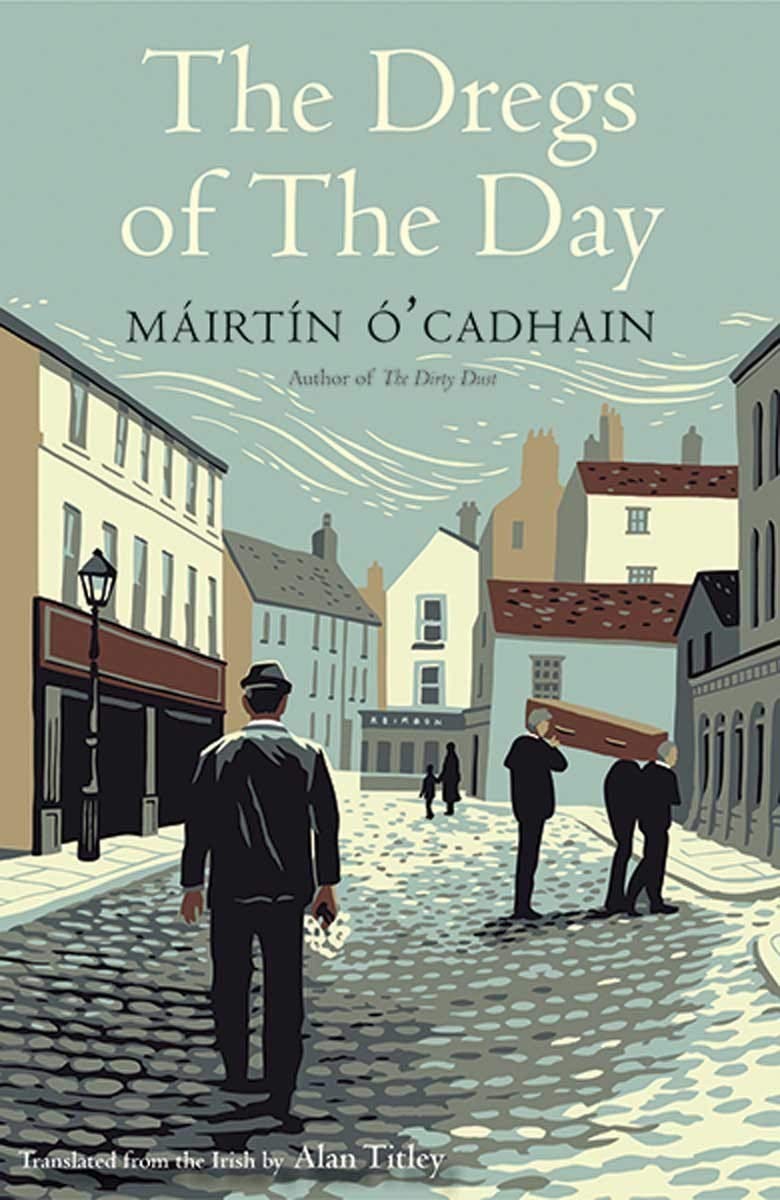
The Dregs of the Day
by Máirtín Ó Cadhain
Translated from the Irish by Alan Titley

Tuesday, August 27, 2019

Dear Aitite

Two Letters All at Once

Old Martin receives two letters from the Basque Country at his new home in Boise, Idaho and his grandson Jimmy asks why he gets too many letters from Europe, but he is unable to share enough. He always wanted to come to America but hadn't planned to settle here for the rest of his life so he didn't learn to speak English well, and now he cannot share his stories and most importantly how he immigrated to America, to his grandson in the language. Now an 80-year-old man, Martin has nothing much to do: spends time tending his lorategi (garden), always has arguments with his Irish daughter-in-law, gets his hands on chocolate pudding and likes to think like shepherds do, as he calls it. The two letters brought back the news of death of his two closest friends back home and as he dwells on the contents of those letters, many of his lost old memories find their way back in and now he wants to put them down so as not forget them again.

Two Basque Stories

As Martin narrates, three loggers Beltza, Iharra and himself enjoyed each other's company though they were completely different in characters: haughty and swaggering Beltza would conquest girls while Iharra would shy away from having to listen to his romances; Martin was quite a dancer; and all three would drink at the bar, sing or even engage in a ruffle with the young men from other town. Martin enjoyed both the bleakness of the landscape and he thought the richness of the festivals and celebrations at home was all that is in the world. But this untouched harmony was intruded when an old man appeared in the town with a cylindrical stone for lifting contest. Beltza gave it a try and when Iharra too wanted to lift the stone Beltza made fun of him among his surrounding girls; a crack opened in the friendship between them. Martin tried to be fair with both of his friends: first tried to stop them from fighting against each other but then tried to be neutral when the unstoppable competition thing – created and flared by the old man – progressed because then nobody knew what plan the old man had up his sleeves. What follows is the Martin's thirst for spying and eavesdropping at his friends' training places and he comes across the treacherous swindle woven by the old man using his two best friends as baits who will be forever mad at each other because of this, nevertheless Old Martin couldn't do anything to stop it, rather he used the competition, amid fear and sadness, in his favor to win himself the sum to buy ticket for America.

Strong-willed Old Martin's frank and jolly narration makes us laugh and feel sad at times. Old Martin's monologue is easily identifiable and original to the nuances of old age and also of the immigrated people having difficulty absorbing the new way of life or culture shock. He tries to draw out a clearer picture of himself at this age, reflecting upon episodes, what he did and what he does and trying to be true to himself, though he is easily distracted by the present as he tries to concentrate on his past, feeling slightly melancholic. Two Letters All at Once evokes humor and sadness as the Old Martin recounts his vigorous and dreamy past, his unlikely fate and little gloomy but a complete life as an immigrant with few complains. This is a story born out of a life traversing two nations and identities. Basque words and the illustrations give both the story and Old Martin a unique and refreshing character – simple and memorable.

When a Snake Stares at a Bird

When a Snake Stares at a Bird starts with a snake hypnotizing a bird with its stare, and the spell is broken when Grandpa Martin – atop a donkey and who is to show him around the town – tells his grandson Sebastian to hurl a rock toward the bird. Sebastian had heard from his father that Grandpa was not right in his mind and he is awestruck when he witnesses Grandpa conversing with a robin, free from being bewitched and then after reprimanding the snake. And of course Grandpa is suffering from forgetfulness, and asks his grandson who he is, even before a longtime passes. A little later, Sebastian follows his grandfather yet to be surprised again, when the chained town dogs stop barking and wag their tail when his scrawny Grandpa passes by on his donkey. Grandpa takes Sebastian to a bar and gets him drunk when in fact he wants to take away the sadness of his grandson, while at home Sebastian's aunt and uncle take this chance to rebuke Grandpa Martin for his foolishness. Grandpa responds with his usual intention of going to Terranova once and for all meanwhile Sebastian in his drunken stupor wants everybody to know that his grandfather can talk to animals.

Soon Sebastian loses the company of his grandfather, and starts hanging out in the plaza on his own, and there falls in love with a girl.  He shares the secret about his grandfather's ability to discourse with animals with his girlfriend. Sebastian realizes that everybody in the town seems to know his grandfather has obsession with going to Terranova. While Sebastian is busy with his love affair Grandpa Martin plans something. Sebastian decides to follow his grandfather at night in his secret voyages, wanting to know more about his Grandpa's ability, wherever he goes, only to discover that Grandfather has finally made up his mind.  We are left with parting texts drawn by a flock of geese.

Like in the other novella of the Two Basque Stories, Atxaga with his exuberant narrative style is able to create a character of an old man with some unique inner life hidden away from the rest and the balance of subtleness and sharpness of the characters makes the story memorable. Part coming-of-age and part magic realism, When a Snake Stares at a Bird is one such story of a neglected old man who harbors a private dream and possesses an unearthly power. The story draws us into a giant world every individual has inside him and directs us to relate with primordial connections we feel toward each other at the same time rejoicing love and freedom with a mystic touch.

Author: Bernardo Atxaga
Translator: Nere Lete
Illustrator: Antton Olariaga
Publisher: Centre for Basque Studies, University of Nevada
Page Count: 120pp
Price: $19.95

Author Photo Credit: https://www.atxaga.eus/bernardo-atxaga/bernardo-atxagas-literary-universe
Review Copy Courtesy: Centre for Basque Studies, University of Navada

Iliad for People in a Hurry

The year is 1945 and Greece is still under the reign of German forces. There, in a small village, a young teacher arrives for whom our narrator immediately develops a crush. When British bombers launch an attack1 on the German base located in the village, the students, among which are our boy narrator and his friend Dimitra, are led to seek refuge in a cave by their new teacher, Miss Marina. With having nothing to do in the darkness of the cave, Miss Marina begins to retell the story of The Iliad by Homer as an escape from the air raids.

1.       We were sitting in the classroom when the first bomb fell, making the windows rattle... The first victim was a donkey laden with wood. Her big belly had been split in two, and she lay there kicking all four legs in the air as she slowly died. The planes were not German. They were British. The next bomb hit the school’s primitive outside toilet, sending turds flying all around us along with dead mice and rats.


Achaeans (Greeks) and Trojans had been fighting for nearly ten years and yet the Trojan wall couldn't be pervaded by the opponent nor could the siege broken by Trojans. The worthiness of war—which was started when Helen, wife of Menelaus, King of Sparta, left with Paris, the son of King Priam of Troy—was waning among the Achaeans but they were under the oath to fight for Helen and Menelaus and had the inviolable need to keep up their war pride. As the story progresses, the foremost Achaean fighter Achilles withdraws from the war and recluses after obdurate Agamemnon, the commander of the Achaeans and brother of Menelaus, takes away his mistress when Agamemnon's desire for a woman is thwarted by the power of Apollo. Soon the two armies face each other, only to come at a conclusion that Paris and Menelaus must fight each other and one of them being dead will thus settle the war. Meanwhile, Helen is anxious that any outcome would be her loss. But Paris flees the duel and shortly the truce is broken and war is flared again. More lives are lost before Ajax from Achaeans and Hector from Trojans combat in a duel which is however unable to bring any culmination. Achaean warriors and leaders sense the absence of Achilles, with Trojans proving heavy on them with growing threat to their ships, but aren't able to appease him.

The Siege of Troy has freshly brought back the vigor, expanse and influence of The Iliad. Reading between the lines, we are able to connect the contexts of two wars: Trojan and Second World War, and are disgusted by the killings and atrocities while friendship, love and other soft and strong emotions still resonate with us. Just as children's emotions are shaped by the plots of the Iliad, they harbor doubtful view of the German soldiers, unable to hate or love them amid their close presence and death of kinships to their name. Reflection prevalent in the story is that war is always surrounded by questions that humans have always found unanswered or answers that are unjustifiable: "Is the need to love greater than the need to hate?"  "Who can distinguish one sorrow from another? Who can distinguish tears from tears?"

In the following days, like in a tug-of-war, the whip hand shifts between the two forces, when even a small hint of retreat from one side or a word of courage or a sense of a good omen made one force overpower the other. The Trojan commander Hector, despite taking several blows2 himself, rages havoc against the assailants and push them close to the camps intending to burn their ships, and the news forces Achilles to allow deploying his forces, the Myrmidons, under the command of his dearest friend Patroclus to exhort the men for counterattack. Before long, Patroclus meets his misfortune and this eventually brings out Achilles to the battlefield having lost his beloved companion and filled with rage. Achilles taking lives of the Trojan warriors and those close to Hector are among the brutal scenes of the novel, and we cannot avoid being horrified when fight turns to a slaughter3, and this finally puts the two foremost warriors, Hector and Achilles, face to face to fight for their honor! Meanwhile, an attack by Greek resistance fighters, claims life of a higher ranking German officer and this leads to a tragic outcome in the village which matches the execution of the innocents in Trojan War and simple lives taken in revenge, and our 15-year-old narrator narrowly escapes his death. But, is he able to save all those whom he loves? The two parallel stories justify and complement each other as we reach to the end.

2.       Hector was at the forefront, and was the first to hurl his spear at Ajax, the son of Telamon. It caught the center of the shield and Ajax took a step back, but he was still capable of picking up a huge rock and throwing it at Hector with all his might. The boulder struck Hector on the neck, and he spun around a couple of times before falling to the ground. He dropped his spear, and his heavy armor prevented him from moving. Several Achaeans rushed forward to finish him off with their spears, but they failed. Hector was immediately surrounded by the foremost Trojan warriors; they protected him with their shields and stood firm until they managed to convey him to his chariot, drawn by his swift horses.

3.       Achilles flailed wildly around him. Dryops was stabbed in the neck and fell at his feet like an empty sack. Achilles left him there and went for Demuchus, pinning him down with his spear before finishing him off with his sword. He dragged the two unfortunate brothers, Laogonus and Dardanus, from their chariot and slew them. The next man, Tros, dropped to his knees in front of Achilles and begged for mercy, but not a trace was left in Achilles’s heart. Tros clasped his legs and pleaded with him, weeping, but Achilles drove his sword into the other man’s liver. Black blood spurted out, along with his life. He killed Mulius by thrusting his spear into one ear and out through the other. He struck Echlecus over the head with his sword so that the blood gushed out, then he chopped off Deucalion’s head. Rhigmus died when the spear pierced his stomach, and his charioteer when it penetrated his back as he tried to flee.

Miss Marina voices the author to tell the war epic in such simplicity and in a fashion of a folktale that anyone who hasn't had the courage to face poetry or chance to read the Iliad would easily understand the intensity of the clash, its evolution and formation, and largely the human side of it with little space for divine intervention unlike depicted in Homeric Iliad. The episodic composition of the telling gives us time to reflect as well as builds up the anticipation among the readers as is among the students in the story. The novel, filled with blood, sweat and tears, has juxtaposed not only the two wars, but has also pictured brutal faces of war untouched by historical or mythological consciousness proving human failure to keep up the truth higher than their pride and provide the psychological depth of the warriors, friends, mothers and lovers, all pointing to the fact that: "War is a source of tears, and that there can be no victors."

Author: Theodor Kallifatides
Translator: Marlaine Delargy
Publisher: Other Press
Page Count: 208pp
Price: $14.99

Author Photo Credit: https://like.fi/kirjailijat/theodor-kallifatides/
Review Copy Courtesy: Other Press

The Seekers - A Quest to the Questions

The Seekers is a one-of-a-kind story collection by Gautamiputra Kamble. Originally published in Marathi in 2004, the collection is translat...