Showing posts with label Hindi. Show all posts

Tuesday, May 5, 2026

From the Vault - Subhadra Kumari Chauhan's Short Stories

I Murdered Mine is a collection of five short stories written by Subhadra Kumari Chauhan. She was an Indian poet, short story writer, and freedom fighter during the British rule in India. She died shortly after India gained independence in 1947. These five stories have been selected from her two short story collections: Seedhe Saadhe Chitra and Bikhre Moti. Her other published short story collection is Unmadini. She is best known for her poem Jhansi Ki Rani (The Queen of Jhansi).

These five stories give us a glimpse of the range of topics Subhadra wrote about. From women’s resilience and struggle to human devotion and guilt, some of these stories were far ahead of their time in their strong portrayal of the true colors of society and its psyche.

Kailashi Nani (from Seedhe Saadhe Chitra)

In Kailashi Nani, the narrator is a girl who recalls Kailashi Nani—a woman from her maternal uncle’s village who earned her living by grazing the villagers’ cattle. The narrator and her family lived in the city, and she met Kailashi Nani only during visits to her uncle’s home in the village. She enjoyed village life, but even more, she cherished Kailashi Nani’s company, affection, and care. Though she appears to be a simple, affectionate village woman who loves children, Kailashi Nani does something that baffles the narrator and her family, transforming her into a figure of selfless loyalty. She ultimately proves her love and devotion by saving the narrator and her sister from a treacherous marriage scheme. The story serves as a reminder of a recent past when child marriage was practiced, and of how certain people leave a lasting, unforgettable impact on our lives.

Sacrifice (from Bikhre Moti)

Babu Radheshyam loses his wife, who dies after giving birth to a child. Initially, he is determined not to remarry, but he changes his mind after meeting Kuntala—an educated young woman whose family is too poor to arrange her marriage. Kuntala’s new life, largely consumed by household responsibilities, begins to affect her health. Domestic life stifles her youth, brilliance, and talent. But, how worse can this get? The ending is crushing.  

Perspective (from Bikhre Moti)

This is the story of Nirmala, a true humanist. She is kind, compassionate, and altruistic. Many learned humanists cannot go beyond the idea of thinking good; they are unable to act well when it is required. Nirmala’s husband, a learned professor, does not appear to be the opposite, given his social stature and sense of nobility. However, cynicism can take root even in the greatest minds. A good human being, in fact, can also be an extreme misogynist, sexist, and a fervent follower of patriarchy.

The clash between these two natures and two ideologies becomes evident and defining when a child widow becomes pregnant, and Nirmala wishes to shelter her for a few days.

In the absence of evidence and action, even human characters can hide behind their true beliefs. We come across this in The Perspective when people's beliefs are put to test.

Roopa (from Seedhe Saadhe Chitra)

The narrator of Roopa is a woman prison inmate. One day, a woman named Roopa is brought into the prison, sentenced for killing her own child. The narrator gets to know how Roopa is sentenced to life imprisonment for murdering her own child, a child with speech-impairment, and whether it was even a murder or something else. The title of the story collection is taken from this story.

Paapi Pet (from Bikhre Moti)

When government forces launch a crackdown on peaceful protesters with brute force, have you ever wondered what happens to the police who return after beating unarmed people, severely injuring some who could even lose their lives? And what about those who ordered the charge, or the legal system that can throw people in jail? What is greater than conscience—hunger? Do the means of survival outweigh a human's ability to decide, to distinguish right from wrong? In Paapi Pet, we get close to the lives of a policeman, a jailor named Barkatula, an inspector, and a magistrate in the aftermath of a recent lathi charge on unarmed, peaceful protesters.

We are very grateful to Sakshi Agarwal for translating these forgotten stories, staying very close to the original text and preserving their vigor. After all, old stories are, in part, a reflection of our history and collective memory.

Original Text: Hindi
Translator: Sakshi Agarwal
Publisher: Chowringhee Press
Source: Review Copy from the Publisher

Subhadra Kumari Chauhan's works in Hindi could be accessed here: https://hindi-kavita.com/HindiSubhadraKumariChauhan.php

Saturday, October 11, 2025

A Dive That’s Deep, A Water That’s Translucent (Guest Book Review by Kabir Deb)

We are familiar with how power, patriarchy and possession redefine themselves every day to stay relevant. But sometimes, society becomes intimidating and forces people to adhere to them or to face the consequences of negating their existence. The consequence may come in the form of isolation, cornering and accusations. Mahua Sen’s debut work of translation The Dead Fish written by Rajkamal Choudhary in Hindi, speaks about the buoyant nature of power, gender fluidity, vulnerability and the necessity of freedom from anything that holds us back. The story equally dilutes the story with metaphors, images and a constant underplay. What goes beneath the layers of these images Choudhary builds is chaotic, dark yet tempting. The writer builds the story on the mind by keeping the body as its pedestal as both of them have to be in unison to create a balance. 

The novel has an eros but it isn’t loud. It is a hum that’s constant but continuous. The characters are flawed and, at the same time, humane. The story has a body of its own, which makes it complex in its telling such that if readers want to get attuned to it, they must attend it with sincerity. It is a chaotic novel since the timeframe of the story keeps on changing from past to present without putting a pause beforehand. It is a form of telling which many storytellers have followed in their works of art to give them a potion of life. Art is an emulation of life. What we experience turns into our work of art. The telling of this novel identifies with life and how it urges us to seek our own identity. It mirrors how most people’s behaviour and languages changes with power. But, at the same time, Choudhary also keeps in mind that, in times of discomfort, power does not help. But those who arrive with love prepare comfort for us, but it can grow only with our acceptance.


Nirmal Padmavat, a man of impressive demeanour, formidable presence, and charismatic personality, is the axis of this novel. He gets to reveal his true nature, which is strong yet vulnerable, before Kalyani, Shirin and Priya since like most women, they get to carve Nirmal’s artificial covering. But, at the same time, the writer cleverly gives us a reality check as well. He writes how the protagonist’s surrender is bolted with a price – expectations – which if not fulfilled forces him to put his pretence back on. The writer tells us that once we wear a certain personality, it limits our freedom. We get to find it in Tony Soprano, the protagonist of the David Chase created show Sopranos, who deals with mental health issues, which he cannot project before anyone else because, for the rest of the world, vulnerability is a sign of weakness. But before Jennifer Meiti, played by Lorrain Bracco, his real ‘self’ comes out effortlessly because of the latter’s affection and kindness. Nirmal sheds his veil off before Kalyani, Shirin and Priya since they look at him with a different kind of prowess in mind – one which is sensual, wholesome and liberates all of them effortlessly.

Kalyani, in this novel, is written as a glamorous, power-abiding libertine. She has necessities and a desire to be on the top of the system, which she wants to fulfil by any means possible. But she is not a parasite. She has her own way to give back whatever she takes. But she can be unkind and cruel, which most people are and it is a flaw and a weapon. Cruelty acts as a sword for women who have to stand beside womanizers. Their unkindness should not be glorified but cannot be annulled either since it is a defence mechanism against power. Her physical demeanour is not like Nirmal, but her tease and words are. The translator keeps that tease alive in her craft since everything that Nirmal does or approaches is a creation of Kalyani’s effect on his male chauvinism. Even his altered behaviour is significantly associated with his association and dissociation with Kalyani. We find this trait in Nellie LaRoy, played by Margot Robbie, in the film Babylon, who hunts down parties to figure out a place the glamour she possesses is noticed. Similarly, in the novel, Kalyani moves from one party to another, to be the centre of attention because amidst patriarchs she must use her own ways, without getting oppressed by the idea, to get her work done.

Rajkamal Choudhary gives us a backstory to Nirmal to allow us to process his hunger for power, arrogant attitude and being a contrasting figure before those he falls in love with. His past sets a tone which is bitter and hence, sweetens the actions of his present time. In the Anandi Gandhi directed film Ship of Theseus, we can relate to Maitreya, played by Neeraj Kabi, because his decision of becoming a Jain monk stemmed from the exhaustion, he felt by living around money, hateful humans and unanswered questions. His choices may not align with ours, but his philosophy cannot be discarded without putting any thought. Similarly, Nirmal’s past is full of horrifying incidents and the choices he makes after earning money and gaining power can be justified. Some may say that what he does is devilish, but the devil has always been questioning whatever is moral, godly and blindly holy. Through Nirmal Padmavat’s actions and behaviour, the writer is not searching for justifications. Rather, he is putting questions in our mind and wants us to answer them as well.

The philosophy of the novel mirrors our complex reality where we trying to accept ideas which many are hesitant to address. But the society around us creates a cage around us to restrict our attempts towards humane development. Nirmal Padmavat is effectively wild, but even in his careless attitude of what others think about him, he is reminded that as a member of the society he has to follow certain customs. The capitalism that Nirmal follows is not hardcore and quite conventional. It is the consequence of the wounds on his masculine ego. Choudhary does not address the wounded Nirmal directly. He follows the arc of several other characters to address his complex masculinity. Normally, hurt is often coined as a driving force for people to grow, which itself is patriarchal and suppresses an individual’s development automatically. Choudhary keeps the story open-ended to make the readers process the idea. For a wider audience, the translator maintains the telling by putting Choudhary’s idea in a string without stitching its ends completely.   

The story of Nirmal with Kalyani does not form the core of this text since both these characters form a medium for the writer to criticize capitalism, industrial oppression, a dreadful fear of modernity, patriarchal hullaballoo, and faith on monoamory or monogamy. Nirmal’s obsession for Kalyani is not directly related to gender. It is also related to the comfort that he found once in her presence. The latter’s libertine nature does not take Nirmal away from her story. Her experience around him has been both satisfying and discontenting. Yet, in the novel, Nirmal Padmavat is written as a seeker of companion, credibility and unequivocal validation. Both these flawed characters are drawn towards two extremities, and the writer leaves their shadows to spread for their world in-between. Choudhary does not refrain from highlighting the fact that even with love, people have certain expectations and get cornered when they are not met. In the novel, when Kalyani finds out the reason of Nirmal’s vulnerability, she leaves him without putting any effort in healing his heavy heart. Nirmal, like most men, choose to adhere to his demeanour and puts every effort to traumatize other people who Kalyani is associated with. The possessive nature of both these characters have been written with metaphors, but these images project the reality of control.

The novel’s take on queer relationship is different and not cheesy. Shirin (Nirmal’s wife) and Priya (Kalyani’s daughter) cross each other’s lives as a source to identify what they truly are. In physics, an electrical circuit’s model can be identified by the switch’s position, but its effectiveness is inferred by the battery. Similarly, the psychological proximity of Shirin and Priya is written in a complex manner, but if read with an objective lens, has certain boosters which nudge them to identify their true identity. The translator does not vent out the chaos since it is essential in a relationship, which has not been normalized by the society and has a beaming effect on people. Choudhary’s writing of queer relationship tries to have a modern structure but with the eros, he incarnates the traditional perception which is not needed, but is commendable since other than Ismat Chugtai, rarely has any Hindi or Urdu writer tried to explore the dynamics of queer relation.

Mahua Sen’s translation is sharp, tight and visceral. It has a flow that reads like an original work but, at the same time, the constant travel from past to present takes the reader away from even the passionate portions. These situations read good in regional languages since we speak them in our daily life and have its innate flow solidified in our minds. Even then, the translator does good work in keeping the images without maligning what they try to say. Rajkamal Choudhary’s Machhali Mari Hui, has been hailed as a masterpiece but controversial work of literature. An English translation of this novel was much needed since we still are not familiar with queer relationships on a very basic and regional level. The stories which come in our forefront are adhered with certain looks, lifestyle and class making them a stereotype. The Dead Fish brings us characters that are modern, belong to the upper class, but has a tone that is Indian and deals with issues which are not unfamiliar to us. A dark, erotic and questioning novel that does not dwell on the surface. It gets deep within our flesh, but can only crawl if we allow it to do so. A complex book that will have its own audience, but those who get to join its characters would enjoy something refreshing.

Original Text: Hindi
Translator: Mahua Sen
Publisher: Rupa Publications
Source: Review Copy from the Publisher
Author Photo Source: Wikipedia
Book Reviewed by Kabir Deb as a guest contributor

Also Read: https://worldtranslationsreview.blogspot.com/2023/08/a-slithering-world.html Book Review of Traces of Boots on Tongue by Rajkamal Chaudhary, Translated by Saudamini Deo

Sunday, June 30, 2024

Ma Shouldn't Be Scared

The ten stories of Ma is Scared portray pictures of Indian women and Dalits (scheduled castes) who suffer, who fight, who persist and also those who couldn't live a life of their choice and dreams, just because of their gender and caste. Anjali Kajal's stories are straightforward and powerful, and what fuels the fire inside these stories are the everyday realities of women and Dalits, which outsiders, like most of us, often fail to notice and understand. Do people question their biasness, do people refine their characters, do people change even after they understand? Rarely does the understanding lead to behavioral changes. Abuses grow wild, hatred replaces simple jealousy, misunderstandings fill the voids. These stories are critique of the present and the past, of our time and the way of the world.

You try to escape, you feel you have succeeded, but again, you fall into another trap, and this becomes your way of life, expected and unbearable. Now imagine, women being trapped – this is the story of Deluge: the difficulty of growing up as a woman, who are kept in fear, confusion, away from men, protected and abused. The women of the family are secluded through beliefs. These beliefs restrict them, treat them different from men. They are unable to socialize outside, unable to aspire and dream, and they are supposed to fit into a character fabricated outside, by their families, relatives and society. In this void, protection burst like bubbles, and harassment and sexual abuse barge in. Women seeking emotional support make themselves vulnerable to emotional predators, and they risk their lives only to get manipulated, to be once again thought of as a property. Defiance, suicide, isolation, submission to your fate, shape or shatter your relations, what would you do? What Pammi does in Deluge?

When men exposed themselves to her, she would be filled with panic. Pammi didn’t know how to free herself from her body. She became so fed up, she sometimes wished she could separate herself from it, take it off and throw it away.

Pammi: Every man is potentially a disgusting animal.

‘If only my mother had shown some strength. If only she had taught me to fight, rather than teaching me only to close my eyes, like her mother did with her.’

Dalits from villages moving into the cities looking for a new life, girls kept ignorant become woman who wants their daughter to be ignorant, boundaries drawn around the lives of girls, that want to limit the girls within four wall of a house – this is the complexities and way of life of story Ma is Scared. Jasbir's mother, Ma is consumed by fear, whether Jasbir would return home safely, whether her daughter would be able to fight against the sexual predators and against harassment on her own. Ma is scared for her daughter's safety, for hatred lurking in the society. Meanwhile, new generation of daughters like Jasbir and Dalit women have been strong, and have pushed the boundaries, trying to burst out of their margins imposed on them.

The environment they live in is suffocating for young women. Everybody interfering with everybody else's business. In small communities like this, a careful eye is kept on everyone's daughters. Girls are brought up in such a closed and protective atmosphere that they suffer from a lack of confidence for the rest of their lives.

Rain narrates a story of a couple. But the story is also about the chasm between a husband and wife even after the marriage, the complexities in relation, especially when past lives bleeds into the present, and unattained destinies deluges their inner lives. Couples are lost in their understanding, the space they keep for solace is disturbed, but relations can be rekindled, renewed with love and trust. A rain can wash away what must be.

They had planned to live like friends after their wedding but without realizing, they had ended up as husband and wife.

There was something wrong, she felt, with the institution of marriage… Irritation was also a part of married life… Love frees the other person, she realized, it doesn't imprison them.

The Newspaper is a story about how the constant barrage of news surrounding us: of sexual abuse, rape, death, murder, riots, terrorism and hate – because the world of the news centers on the bad (?) – negatively affects a homebound mother with depression. Women left alone at home are prone to such societal factors such as news, which are funneled down to them. This also can be extended to the interpretation that lives at margins, which can be created even inside our families, are vulnerable to all kinds of influence. Women made to live at the margins, not made strong to cope up with societal influences may develop one or another kind of difficulties.

Taru, Zeenat and A World Full of Crap revolves around disability, child adoption, motherhood, the complexities of relation, failure of people to understand disability, motherhood and women as a whole.

History delves into the entrenched social hierarchy of India, where the marginalized Scheduled Castes face discrimination from a young age in schools, perpetuating a cycle of hatred and resentment. Hatred against reservation, hatred against those coming from Bastis, and discrimination ingrained deeply in the society, these form the sad chapters in the life of a character, which represents the common fate of many.

Pathways is another story of resilience of a Dalit boy who waits two years before getting a placement in a government engineering college.

To Be Recognized is a story of the fate of girls wanting to pursue education, the hatred and discrimination against reservations and people getting it.

'These people get away with murder. They don't have to study; they don't need to pass. They get everything through charity.'

… their families expected them to be housewives, they weren't allowed, let alone encouraged, to work outside the house. Once in a while, a few stubborn girls managed to convince their families to let them continue studying, but the rest resigned themselves to their fate.

'Daughter, don't teach these lower caste children too much. They will only grow up to become competition for our own children.'

…………………….

             Darkness was written in the lines on my mother's hands.
             The soil on my father's body belonged to somebody else.
             My family had no fields of their own,
             No country in their name, that they could claim.
             More important than existence
             Is to be recognized.
             There are centuries between us.

Suffocation is another such story to show discrimination even by/among educated people, women who are not able to pursue jobs and explore world outside, women given a life where home and family are regarded as her sole responsibility, and where men tend to escape those responsibilities in one or another name. Isn't it obvious that frustration take root among those who couldn't live their life to the fullest, who could never explore the world outside, people who realize that they lost their active life somewhere else, when it could have been different. Isn't it a suffocation to live a life not chosen by you?

All my life, Vimal has put me own, saying that I'm not his equal, not as educated or intellectual as him. And I carried that shame all those years. I ran from pillar to post, working outside and inside the house, educating the children. I have to be perfect, I always told myself: a good mother; a good housewife; a good wife. Only now have I come to understand that all this was just as much the responsibility of my intellectual husband as it was mine. He did nothing but pick faults with me constantly.

Sanitizer, set in the Covid world, still talks about the discrimination. Casteism has now been carried from old to new generation, and the thoughts have been fanning inside the mind and thoughts of little school children, where jealousy have been fueled with hatred. 

'Here, the area behind our colony is not good. It's mostly Scheduled Castes. These people don't wear masks. Covid is spreading mainly because of them.'

Anjali Kajal has shown us the world around her, its characters and its fabrics. We cannot accept discrimination; we cannot accept casteism. We defy hate, and we defy abuse of all kinds. We are not just story readers, we are men walking outside of these stories, and living in these stories. Forget the characters, we are the characters. Forget the plot, we know the right way. Ma is Scared, let's go to her. 


Author: Anjali Kajal

Original Text: Hindi
Translator: Kavita Bhanot
Publisher: Penguin India https://www.penguin.co.in
Source: Review Copy from the Publisher

Thursday, August 3, 2023

A Slithering World

Who says you need a boundary? Damn the structures and comfort realities! Rajkamal's narrative branch out wonderfully to surprises and reels you in so gently, you want to chuckle at his wit or might even hold your head in discomfort from the brightness. The subtext, luminescence, bleakness and naked truths of individuals of Rajkamal's world was way ahead of his time. Upon finishing this collection, or every story, you feel like coming out of a long tunnel and be light-stricken.

In just mere age of 37, he had written hundreds of stories and poems, ten novels, essays, criticism, etc. and they are collected in Rachnawali by Rajkamal Chaudhary (Set of 8 Volumes). His eclectic view of the world are seen in the stories of the collection. And it surely must have created a displeasure among his contemporaries and critics. He was experimenting with wild ideas, stigmas, narrative and structure, disrupting understanding in its wake. The portrayal of sexuality and the reaction to it have never been easy in South Asia, even if they are used in literature. You'll know, Rajkamal's portrayal of it is not vulgar, but rather an artful disclosure and meaningful. Reading the collection, we gather that, above all, Rajkamal must have been a great thinker misunderstood by his time or not revered enough.

In the 12 stories of the collection, we find wild and bizarre imagination breaking the waves of cultural stigma, composition of discomforting veracities, oddities of characters and persona of modernity.


In the first story, Still Life, realities blur and transcend into one another. Mirrors and still images are emulsified in the dreamy awakening of a sick man and there is his girlfriend trying to help him. We find ourselves in the midst of a hallucinatory living. Like suggested in the intro by the translator, the narrator's contemplation on life, death, suicide yields to nothingness. It is like being inside a surreal mind of an artist, who is ready to damn the world. In Some People in a Burning House, the narrator, a salesman is sent to a brothel by his friend to spend the night. Police raid happens and brothel women and their clients end up hiding in a damp, dark and dingy basement. The scenes and the setting is vivid and palpable and yet the author do not attempt to overdo the details. The dark makes the instincts and senses sharp, and the result is, you'll sense the story. You'll find as if you are there among the characters too, living their life; being them. An old man bleeds in the middle of the dark room and another saves matchsticks for his cigarettes. The momentary details: blood, scream, fear of death, stench of dead rats, sex, and nakedness, all of this explode, or even can be said, implode into a giant realization of emptiness, futility, damnation of morality and love for life even if it is disfigured or in disarray.

Elementary Knowledge of Geography is a story of sexual encounters of a teenage boy and his inner world of confusions and personal ways of getting out of the disquiet and fear. The narrator, a teenage boy, shows us his world around and his experience and witness of sexuality, homosexuality and the complex world and people abutting them. Rajkamal is not afraid to drop taboos in his text, or establish some dramatic comedy with dialogues and scenes. The playful narrative style and shifts in the story at once makes it lively, brings contrast and also breaks the monotony, though we rarely find one. In A Champa Bud: A Venomous Snake, a husband and wife plot to marry off their daughter to a 62 year old man.

In An Angry Man, three friends meet at a port restaurant, their usual rendezvous, near Ganges River and wait for a woman coming on a steamer. Who is this woman? Among the three friends, Kamlesh is irritable and now his thoughts are troubled, angered and perplexed by his possessive maid; Ramnath still hasn't been able to come out of his unsuccessful love affair and episodes that met an unexpected end, and Mehtab companies his two friends. This story has a cinematic appeal to it and the narrative expositions makes it more intense. The world of these characters is surrounded with the influences of contemporary world – movies, celebrities, news. and is therefore also sets a transporting experience for the readers of our generation. Sometimes, Rajkamal's stories represent his zeitgeist while at other times, he even beats today's contemporaries in style and dissension. In An Angry Man too, Rajkamal's ploy lies in his strength to make personal dilemmas as the commonality of the age, while also being able to give a comic or witty charm to it – if these were turned into plays, they would come out as tragedy of the century versus the comedy of the existence. We also feel, the learnedness of the author who could encompass everything global to his use – visual arts or literature. We may also be tempted to believe that the banal are the most exciting things of the world; at least I did. An Angry Man can be read for many things – psychological drama of the individuals, the urgency of coming out of horror of loneliness – but what grasps us the most is the style, especially the shuffling of episode from the past, the personal realms of the characters and present burning with crisis as if in a coal. How inner world exhibits itself in the external relationship has been one of the themes of Rajkamal's stories.

In Warriors Don't Worry About the Right Time, the narrator visits his maternal home where his widowed uncle has delusions of apparition of his deceased wife appearing at night. There is also narrator's widowed aunt who haven't left her village after becoming a child widow. Snakes of Silent Valleys – This story will give you a deep pain and leave a furrow. The intricacy of the relationship between the narrator and his aunt's daughter, and the narrative voice is so piercing, that I personally consider it the best story of the collection. The story bulges like a surface of water; everywhere there is a tension; everything is sensitive to touch. And the mindfulness of the story is simply brilliant! Sometimes it becomes like a raw skin; you will be afraid to touch it. As if told in a stream of consciousness, you have no escape other than to hear Khagen's voice word by word. There is existentialism, lurking sexuality, reclusive and hindered love and pervasive crisis of relationship. Here, I am going to leave this as a mystery for you. I want you to find the sensibilities of the story, enjoy it, become its victim, become its witness and come out alive from the grip of snakes of the valleys. In Sisters-in-Law, we find two widowed sister-in-laws making their living by selling their bodies. And one day a strange incident afflicts one of them with horror.

Like Tennessee Williams' Mrs Stone, you donot know what to think and what to forget. You just want to escape. You are afflicted by the fear of the conclusions of your thoughts. You are unable to ask who is with me if I am not alone. It is raining outside and I don't want to get wet.

No, I do not want to die. I only want to kill the flame burning in my stomach. A wrong Jesus Christ is growing in my womb, I do not want to raise the child. And now the world doesn't even need Jesus Christ, it needs atom and hydrogen bombs! – You want to say it but you don't have the courage.

Set in a tribal land, the story of Veni Sanhar starts with hallucinatory images of a sickly woman who sees her surrounding engulfed in flames. She is a mother of an infant and is not in her right mind. Her husband has given up on her treatment. A black cat, considered a bad omen in Hindu culture, appears from the wild. The encounter between the sickly woman and the cat turns into a violent episode and leads to even more disturbing consequences. Like a Wall of Glass is a story of an artist who dreams of painting a woman, and ends in a disappointment and disgust. In Pyramid, a married man brings a woman into his house, particularly to show the charm of his drawing room, a self-comforting upper class display among the ruins, while his maid and wife remain restless until the woman leaves the house. In the title story, Traces of Boots on Tongue, a man goes out to a hotel to freshen up his mood and encounters mysterious women who are sticking out their tongue to him for bizarre reasons. And one thing to note is that, snakes are the repeated symbols used in these stories. As if people have mimicked the presence of venom, fangs, the threat display, its slither, and constriction, and are lurking behind others, waiting for the bite. I think Rajkamal was fascinated with snakes as symbols, and I am curious whether his other stories have snakes in them too.

A person's life is divided into pieces. There is no one person. There are people inside one person. Many contradictory situations. Nymphs from Kalidasa's heaven. Constantly warring gods and demons. Times future, past, present. Life is not at one place, which can be presented by tethering it to a mirror, a painting or a poem. Life is everywhere. In every moment, in every piece, in everything there is life. And it solely depends on the one who lives the life whether a moment is accepted under a certain circumstance and accepted until when.

She doesn't possess a maddening beauty or hypnotic gestures, because she is a wife, an Indian wife, who can cook, fan and massage tired feet but cannot say that she loves me a lot, with an amorous expression on her face, with warm breadth, flared nostrils, widened shoulders and ruffled saree.

Rajkamal has used different techniques in his stories like repeating the sentences, images and names creating a vertigo, and also to remind us what possess the characters' eternal doom. He carefully places his characters as if in a painting or play and decides their movement, sorrows of characters and therefore of being. Poetic pieces too have entered the stories in one or other way to leverage the intensity of narrative. He knows every fiber of his characters and how easily they can break. It is a restless world filled with doubts, disbelieves and compromise. You'll find terse dialogues and their interplay in the text: their entry and exit is sublimely done. We see man made from the past thrown into the world for personal struggle and face his/her fate, and dilemma of the artists which Rajkamal himself might have felt at his time. The realization of his era is vibrant, and so are his references built upon the religious texts, modern science, contemporary art and literature. We find ourselves in a profound feeling of empathy, as if at the bottom of deep well looking for the heart and sorrow of the characters' gloom, confusion and existence with a torch in the murky water. And at several instances it seems as if he is speaking with us, asking us questions and involving us in the narrative. Rajkamal's stories are not in the easy world despite being rooted inside it – it is composed of the feigning, the bearing and the reverberations, the bleakness of personal world and horror, the desolation of absence and unspoken personal experiences and tragedies.

We would like to express our deepest thanks to Saudamini Deo for this translation work. You have lit the candle!

Author: Rajkamal Chaudhary
Original Text: Hindi
Translator: Saudamini Deo
Publisher: Seagull Books https://www.seagullbooks.org
Source: Review Copy from the Publisher


Sunday, July 30, 2023

A Mantra to the Past and the Core

Imagine an old, dusty, murky and decaying library which nobody visits anymore. If you step inside you'll find an old man in his late 70s, lost in his own memories, keeping watch of the library as if keeping a vigil. Who is this old man? A yellow window of a house opposite is seen from the library's window, and it floods back memories of the old man's lost love. One day, a boy visits the library, and forms an inexplicable bond with the old man, but the two men cannot understand each other, nor do they care. The yellow window charms both of them, and with different reasons. But, we are outsiders in their life. We'll soon know their world, which has lights and shadows, tragedies and hopes, tensions and a glimmer of love to cling to.


Boy is at the cusp of difficult relationship with his father, an imaginary love affair, and a mystic attraction for an impervious love. He is searching for love, a highly paid job and wants to prove to his father, that he was right and his father was wrong the whole time. A tension between two generations – an expectant father and a self-assured son – intersperse the story. Boy is living the present. In contrast, the old man, Basar Mal is at the crossover of memory of long lost love, threat of land mafias, old age and weakening strength to keep going. Still, he is searching for some hope, taking pleasure in rekindling the memories – that which gives him both pain and pleasure. Basar Mal is virtually living in the past. We find a perfect characterization of the old man and the boy. Intensity and the voice are just right. We know what they stand for – the contrast between two people at the two ends of life.

The story takes us to Larkana, Pakistan where Basar promises Jaam that they would run away together. But then the India-Pakistan partition not only divides the land and people, but also these two loving souls. After a long struggle as a refugee to get an identity, Basar Mal settles in Mumbai, gets a job and opens a library where he finds his solace and a resting place for his overwhelming memories of Sindh – his land and people, and his love. But, it is also as if trying to hide a wound for your life, because it is there.

Here, the Sindhu Library is a place of melancholic escape, a dignity, for a slumber to the comfort of dreams, a ruin of life that doesn't know how to dissipate and why to fail, a poetic gesture of unbridled love for the land, language, people and heritage. You'll never forget the old man for the rest of your life. You'll search for him in the hidden corners of the library.

This is a story of aftermath of partition, story of a man from the Sindh, in part a story of refugees and people displaced, but more than all of this, it is a love story, a tragedy – of people left alone and the forgotten histories just like the old neglected library. There is an underlying philosophy around memory and how it shapes our present, and what we are, and what we become at every moment. Sad end of old realities haunting the present, as if a man cast away in the past, has come as a revenant; has come to the present to die. As we read the novel, we see a mirror building at the back of our consciousness and things appear there – a gigantic revelation, a discomfort, and a weight of the past. In non-existent guava smell, the unheard laughter, the yellow frame of the window, and loose fading pages and disintegrating covers of the library books, we find the scattered sensibilities, and without a single reality to hold onto, yet they are the only consolation.

There is nothing more personal than memory. Nothing more manipulated than it. The struggle of memory with memory, struggle of memory with oblivion, struggle of memory with imagination, struggle of memory with truth, and struggle of memory with beliefs and suppositions – at how many levels this goes on, and in how many worlds simultaneously – that someone said, the human is a memorial to the multiple worlds of the human in oblivion.

The story alternates between the stories of Basar Mal, the boy, books, and few characters surrounding them in the past and the present. Each time, we progress to something more subtle than before, and if we take a moment to reflect, they project to something universal and ethereal of this land and of the susceptibilities left alone, ridden on the voice of soul. Detailing has been kept to a minimum, but things happen elsewhere, on other realms, where you'll immediately find your other self. We will find poetic pieces, as if they are stations or branches where authors wants to stay a while, but then he moves on.

The silences in the novel are moments of brewing up agonies, or of dreams what can keep you awake. The passing of time and wait seems like an eternal futility but is also a core of love that drives us, that makes us blind and shows us the other way inside. Memories are treacherous, invincible – they can come back in smells, in laughter, in resonating images – but what should we make of them, where should we keep them, how long can we ignore them, where will it take us? We see a mild vertigo, and a restlessness in the story, which perfectly capture the moods of the characters. But who has the mantra to open the portal to a quantum of solace, to a peace of mind, and to a happy endings to our love? Perhaps none has, but... After finishing the novel, when I reflected in peace, suddenly everything became universal! It was moment of delight.

When you are just beginning to make sense of the world other than love, you cannot understand the war, the purpose of hatred, and the entitlements after killing. The background set at the verge of partition has given the story a chance to revisit the tragedy of the pasts and the following parting, struggle, blood and death. When the cover of the book speaks, we find the reverence for the books, as if a hymn by the author, as if he is finding place to speak with us more personally and share his love for the literature and books and at places, he purposefully animates the books. The emoticons : - ) do their job, and at other times, the left end, the incompleteness completes with sentimental richness.

I am a book. Touch me. Kiss me. Read me. From start to finish. I am the beginning. I am the end. You don't need to try very hard. If you've felt me with your fingers, then you've kissed me with your eyes. And, if you've pressed your lips against my skin, then you've reposed me in your heart. A sincere touch or a heartfelt kiss is enough to open me up.

Simsim is a humane story! We know what forms the characters and their fate, their world, their recluse and their solitude, their will and their passion to continue. The story is of all those and that is left after a storm, and you cling to them for dear life.

Thank you Geet for the story, and Anita for this wonderful translation sticking to the originality of the language, which feels as fresh as the memories of guava smell. : - )


Author: Geet Chaturvedi
Original Text: Hindi
Translator: Anita Gopalan
Publisher: Penguin India https://penguin.co.in
Source: Review Copy from the Publisher

Sunday, July 2, 2023

A Roof of Dissent

Do you want me to tell you what's the story? I might have to read you from front to the end, from end to the front, read the lines, read between the lines, become the narrators themselves – lost in the world of the past and that which is present and not present. If I have to, I'll have to quote the whole book. The narrators will reel you into a daze and haze of memories. They will identify themselves, become unidentifiable, and become one and another.

When the roof is beneath your feet, there’s the whole sky above.

Chachcho, Chachcho… Memories rustling like dry leaves. Memories like a magic lantern, moving from here to there in a flash, turning upside down, inside out, playing tricks.

Even the happy moments from this world of memories give the old man more grief. Dreams that go backwards, not forward, can do nothing else.

Lalna, Chachcho, Bitwa and Uncle are central to this story. So is the roof of the Laburnum houses which flourished a friendship between two women – Lalna and Chachcho. Bitwa is a son of one them, don't ask me of whom. Chachcho and uncle are now dead. Lalna has returned to the Laburnum house after getting news of Chachcho's passing. But, she has brought once again the same storm to the house which engulfed Bitwa when she lived there. Or, has she come here finally to settle down? I am afraid I might give you the why, or if I can.

The two part narrative – one of Bitwa and another of Lalna – will take you to their inner world, which is way scattered, and bigger than the outside. You might not want to believe all of their secrets and the way they tell it, but you'll believe it all – it doesn't matter even if you don't! The richness of The Roof Beneath Their Feet is in how it has crafted its structure and voices. The voices are like portals into the inner rituals and complexities of the relationships. You start from an individual and reach a place of distorted realms and inner turmoil, of sadness and longing, of memories and hatred, of love and unspoken truths. Again, you want me to give you the story; I'll give you the book instead.

Bitwa is torn with memories of Chachcho, and it is dragging him to the past – a past where there is a shadow of two women hovering over his identity. It is as if Bitwa dips in and out of the memory pond, and is confronted by Lalna wherever he goes. A common roof shared by hundreds of Laburnum houses has its own story. Here a personal history or tragedy, whatever you call it, takes form of people, courtyard, window, stairs and the roof. You start from the earth, and there's no end where you can go. Here a mohalla comes alive, but what interests us are Lalna and Bitwa, tied together with an unfathomable union. Hidden behind the obscurity of the voices is a story of people neglected, hidden, longing for freedom, like the Hindi title Tirohit suggests.


The roof where Chachcho and Lalna made their escapades is a symbol of freedom, a dissent, a revolt and a longing. Behind and beneath the personal tumultuous history of the roof and relationships, lies a sexual misinterpretations and stigmas, sullied by rumors and the patriarch. Two women turned into a man and a woman, a joyful meeting turned into an ecstatic and sensual love affair. Lalna is a symbol of rebel! The story fits all harmony of a double base and all the notes of a piano – this is not an exaggeration, you have freedom of sensitivity while reading this story. You can give it different moods, and it fits all – you'll believe me when you read it.

When the women and children and servants would crawl out like an army of ants from their holes below and gather on the roof, they would never want to stop. Snacks, titbits, more snacks, more titbits, and riding on these, the women’s gossip, the clinking of their bangles, the lifting of their veils. The servants would have their own business, hanging wet clothes out to dry, lighting a beedi, chewing tobacco. On one side, the children’s playfulness, the teenagers’ wilfulness on the other.

I read somewhere that religion was born from sin, and philosophy from grief.

This is what a house in mourning looks like. Faces like pumpkins and flowers in full bloom, side by side. This is what a house in mourning looks like. The dead live on, the living keep dying!  This is what a house in mourning looks like. The dead become real, the living become unreal.

Some sentences, and images are like a meteor coming straight to your dark and elusive senses. However, the author is concerned, we are not lost in the realm of her narration. Some descriptions are like a poetic dream, imagination of a longing. What does one want – to get rid of memories, be haunted by it, to recreate it, to hide it, discolor it? Bitwa's remembrance finds himself in the cozy comfort between the two women's friendship, but also in a gust of its perplexities. At times the author takes such sharp turn in point of view, you're awed.

Some people, even if they lie quietly in a corner, can spread everywhere like grief.

If you’ve been a part of someone’s life, you’ll be a part of their death too.

Is it so, that we see those who were there only when they are no longer there? Is it so, that we only live what’s not there, and the things that are there remain mere mechanical habits until they recede into dreams?

It is like recreating a world out of memory and finding yourself a place in it. You'll find puzzle pieces, a thread and finally a peace or mild pain of discomfort you compromise with. This a story of a friendship, a motherhood, freedom and love. You'll realize, the complexity of human relation is such an art, a drama and a restlessness.

You'll find here rivalry, unspoken love and hatred, and at the same time a flame of a memory keeping two spirits bound. When memories get their dreamed appendages, they become animated and drag you along. To sum up – It is a perfect complexity like an art, has subtlety like its habit and it is like a hand caressing your soul, and speaking to you in a language you absorb. If you start constructing the images, you'll be addicted. You feel the ambience, you become narrator's memory; you are there. The stream of consciousness, moving between narratives and times is like a poetic dream of a rebel, friendship and motherhood. If this were to turn into a movie, it would be another art. Flash of light like memories, sometimes like rain rivulets following a rugged path of solaces. The discomfort will please you, with earth like sentences. Sometimes, you become hungry for the objective realities, and the narrators touch you with a feather of dream. Try reading it with some music, it becomes the music. Here realities grow wings and fly higher to the realm of subtleties.

Do you still want me to give you the story, plot?


Author: Geetanjali Shree
Original Text: Hindi
Translator: Rahul Soni
Publisher: Penguin India https://penguin.co.in
Source: Review Copy from the Publisher

Sunday, May 21, 2023

TREASURE TROVE OF STORIES

First things firstmany thanks to the Publisher and the translator for bringing these stories to the world and for bringing back Bhuwaneshwar from the obscurity for us, who would otherwise never have known of this genius. 

One thing you'll notice is the beginning of all these 12 stories. The writer immediately sets such a background with philosophical or narrative or scenic description, that you'll be drawn to it.

In the Sun Worship, a sickly student and a doctor are trudging the dark, damp and dingy isolated city in the night and are at the cusp of hopelessness, disgust and optimism. The images and the dialogues are so piercing that they'll stick with you forever. The story is a timeless worship on human condition. The existential crisis among pre-independence people is so evident in the story. A Glimpse of Life is a story of a 65 year old man who is in his death bed, and his devoted wife. Love and memory are the center of the story. Alas, the Human Heart and Aunty are stories of deep-seated love but the turn of events takes us from horror to tragic latitudes. It must be a wit and generosity of the writer, that he allows readers themselves to understand the story for its subtlety.

Why are there so many duplicates when the original itself is so despicable?... I don't knowI don't know how anyone can live without having a compelling contract with life. – Sun Worship

The story of Freedom: A Letter must definitely had been a revolutionary in those days when it was published, when today it is still a societal cult when a woman decides to raise a child born without a wedlock on her own. The metaphors and remarks appeal and reflect upon life and freedom and their vitals. It is sometimes bleak but the character come out victorious at last. In the Womb of the Future is set in the backdrop Spanish Civil War. It can be considered a classic war story of love, war, tragedy and devotion. Masterni revolves around a Christian woman who teaches children in a Hindu village. It must have been rare that such stories of beyond the curtain of colonialism were written during those times. The empathy and emptiness shaped in the story is at core a facet of personal ruins created during those times of hegemony.

Don't you feel that we neither live our lives nor die our own deaths? The charity hospital-gown-like life neither looks good nor fits well, and, even if it is clean and washed, death inhabits it like the stench of chloroform… Man himself has created birth and death so that it may elevate himself with these poetics. – Freedom: A Letter

It was dawn in the Carcasonne region of France. The cruel rays of Helios had attacked the earth after slaughtering the stars. The face of the firmament was red with anger. But it grew calmer upon seeing its unchallenged dominance spread through the atmosphere. Who could tell when the flame of revenge flickering in its depths would flare up into a blaze? – In the Womb of the Future

Mother and Sons is one of the most dramatic tragedy-comedy stories in the collection. But at deeper level, the observation of a dying woman and of course that of the author touches those inner layers of human characters and fate, such that the rawness and the vulnerability of life becomes palpable. One Night, like the author says at last, is just like a poetry. You'll just collect the ripples as you move along the story. Bhuwaneshwar's stories effortlessly gives life to the characters and images, just as easily as breathing. The inner world of Prema seems exotic, but by the end, all fits so well! So is the story Postmaster. The open ends of Bhuwaneshwar's stories shows his understanding and power of storytelling.  

When the pace of life quickens, it turns into something like ease. It seem that we have conquered our bonds and boundaries, we have moved on from struggle, but this is a difficult delusion. We don't realize it and neither did the poor postmaster… Imagination is resistance against life and nature. – Postmaster

War is another keen and observant story. Set inside a rail, the harmony inside the disharmony, the comedy inside the meaninglessness and the drama of the characters makes it one of the liveliest stories of the collection. The last story of the collection Wolves is probably one of the best tales as gripping as those of Marquez or Grimm Brothers. When the story makes you believe the improbable feat, the story has won. Wolves proves Bhuwaneshwar's strength as a great storyteller. 

You won't find age-old clichés in the stories. Bhuwaneshwar takes the meaning in simple and caustic words and put it in front of your faceyou are shocked, taken aback or just want to cry sometimes or reflect in horror. The deviation in the style proves the wittiness of the writer and his attention to detail and differentiation. I have said it before, the intro for every story is unique and a signature style of the author, where he mixes his colors of the story like an artist does in his palette. Individual dilemmas, moods and crisis are so much objectively presented in these stories, none of them seems like they cannot fit or blend with our lives today. You'll feel the intensity burning inside the characters; you cannot escape their fate; you become a part of their lives.  

Author: Bhuwaneshwar
Original Text: Hindi
Translator: Saudamini Deo
Publisher: Seagull Books https://www.seagullbooks.org
Source: Review Copy from the Publisher

Wednesday, February 10, 2021

Coming Soon...

The Walls of Delhi
Three Novellas
by Uday Prakash
Translated from the Hindi by Jason Grunebaum


Tuesday, June 2, 2020

Coming Soon...

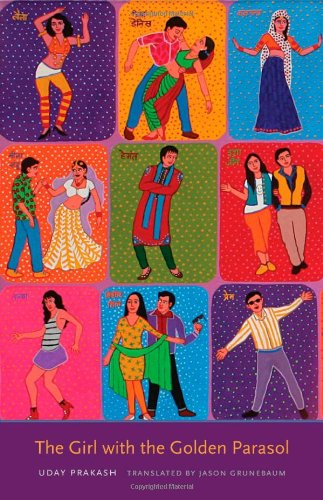
The Girl with the Golden Parasol
by Uday Prakash
Translated from the Hindi by Jason Grunebaum

The Seekers - A Quest to the Questions

The Seekers is a one-of-a-kind story collection by Gautamiputra Kamble. Originally published in Marathi in 2004, the collection is translat...