Showing posts with label Bengali. Show all posts

Sunday, July 12, 2026

Bengali Fairy Tales Get An Un-Fairy Tale Ending: Children’s Book Review (Guest Book Review by Nupur Maskara)

Once Upon the Queens has translated stories from the iconic Thakurmar Jhuli, a collection of Bengali rural folk tale stories. Written by Satabdi Das, and translated by Nadia Imam, this book deconstructs some of the original stories, to give them a feminist twist. Beautifully illustrated by Paramita Brahmachari, this is a collection that takes you back to childhood, and introduces the new generation to classics, but updated to reflect contemporary times.

Das has introduced each tale with a rhyming verse, like Dakshinaranjan Mitra Majumder did when he compiled Thakumar Jhuli in 1907. He had divided the stories in three sections, and Das has chosen a few from each section to translate in English. She concludes with a translation from Thakumar Jhuli’s sequel, Thakurdadaar Jhuli.  The sequel was for the girl who used to listen to Thakumar Jhuli stories, grew up and needed to be reminded of her place in the patriarchy.


The first story, from the ‘Dudher Sagar’ section, is called ‘The Sleeping Kingdom,’ and was similar to Sleeping Beauty originally. Das makes the princess the protagonist instead, and gives her agency as an adventurer. She reverses the reasons for sleep, switches the sleeper and the savior, and revises the roles others play in the story too.

Das has revised the famous story ‘Kalawati’ similarly. In ‘Kachanmala and Kakanmala’ Das adds shades of grey to both the titular characters, rather than keeping one as good and the other bad, like it was in the original.

‘Seven Brothers Champa’ does away with the cruelty of the original, which was about infanticide. By creating a sisterhood instead, Das shows another way for women to co-exist, rather than vying among each other for male attention.

Other famous tales Das has translated include ‘Prince Red Lotus, Prince Blue Lotus’ and ‘The Golden Stick and Silver Stick.’ Das questions why the demon, as the Other, is often defeated by deception and asks whether that is morally correct. She revises the ending to be more open.

In ‘One and a Half Finger,’ Das highlights the issue of caste, changing the protagonist’s gender to underscore the plight of the girl child. ‘Malanchamala’ originally centred the protagonist around marriage, but Das creates a new Malanchamala, who girls today are more likely to identify with.  

This collection is one that will bring parents or grandchildren closer to young ones, as they tell these stories to them at bedtime. Considering feminist retellings of tales like Cinderella have already happened, this was long overdue.

Hopefully children reared on tales like these, which are set in more egalitarian societies, will also then think that girls and boys are more equal, and can make their dreams come true. However, they must see what they read about reflected in the world around them as well, otherwise fairy tales will stay fairy tales, and they will replicate the reality they see.

Still, books like these are a step in the right direction, for only when the youth sees possibilities can they learn to think differently, rather than repeat history.

Original Text: Bengali
Translator: Nadia Imam
Illustrator: Paramita Brahmachari
Pages: 124
ISBN-13:  9788197684890

Saturday, July 19, 2025

Long Live the City, Long Live Nata Da

It's been a while since Monotosh, the narrator of The Ruffian, moved out of the city in which he grew up. He has arrived at his old neighborhood once again – Galiff Street, Bagbazar, and the surrounding areas in Calcutta. While strolling through his neighborhood, as he reminisces about the changes that have taken place since he left, he accidentally meets old Nata da – a famous rogue of his time. Not Monotosh, but Nata da is our unruly protagonist.

Monotosh accepts that he is a failed writer, yet he wants to record the life and times of Nata da, who has lived long enough to see it all. What follows is a sweeping account of Nata's life, told by himself in multiple sittings.


Source: https://www.theantonymmag.com/the-ruffian/

Monotosh notices that the old streets have changed, and so have the houses. New structures have risen in place of warehouses and depots, the brothels have been demolished, and the luminaries that once marked the city are either dead or forgotten. Smells, sounds, and sights have changed, and in it, the house he grew up in has been crushed. But Nata hasn't forgotten them, because he lived through that time — it has been etched into him and remains stuck in his still-intact memory. We come to know: a city can forget a man, but a man never forgets his city.


"I fucking embody pleasure. Haven't you seen legends behind trucks saying, 'In dreams, you get pleasure, for peace, you head to the cremation ground!' All bullshit! I've always found pleasure, wherever I went. I found it in jail when they booked me for being a mole, when I was beating up people, when I was beaten. Khagen the madman used to sing a song, 'Happy from weeping, farting, illness, and shitting…'"

Nata da lives in a Lebutala slum. He recounts his beginnings, his family, and most importantly, how he began as a rogue — a man wielding power in the locality. However, Nata's life is incomplete without the people he lived with; therefore, the story branches out to include multiple characters who shaped and marked Nata's life.

Nata and his friend Manik had to find a trade for themselves. They couldn't live like ordinary kids; they had to grow up early and find their own way. Such was the time when boys like them, from different localities, would claim territories, and any chance of earning a few bucks would be contested, giving rise to disagreements, disputes, fights, and rivalry. Nata da fared well in all of those and made a name for himself. Even political parties needed rogues — the likes of Nata da.

The world seen and lived by Nata da is so detailed and intricate that you'll be transported to the era. He was in his prime youth when ruffians ruled the city. It was the 1960s and ’70s, when Kolkata became a center stage for political changes and tension, especially during the rise of the Naxalites. And Nata is a witness to those societal and political changes, as well as to wars. Whether through allegiance, getting favors, helping with bombs, or a runaway case, Nata's life was not only touched by these events but was also colored by them.

Like mentioned earlier, Nata is made up of the people of his time: Jui, Joba, Panchi Mashi, Nepal Roy, Shato da, Chhanu da, Abhoy da, Gopal-the-Goat, doctors, Khagen, Khendi, Manik, the theatre manager — all these characters and many others shaped Nata's life. Once we finish the novel and reflect, we feel the extraordinary life he lived. What if it had been different? Should we be sad for Nata? Maybe not.

Nata da, who once held strong authority in Lebutala and its surroundings, recounts how he slowly vanished and lost his vigor and valor. He just faded away — Nata, who wielded soda bottles in fights, was involved in the illicit business of selling movie tickets on the black market, lived inside a brothel and even managed it, made bombs, taught people how to make bombs, and provided protection to thugs. It was a burgeoning era of thieves, gamblers, extortionists, and pop culture. But Nata tried to stop being a small-time rogue and to settle into a real profession, though it never worked out for long. 

Ruffians meted out justice in the locality. They earned names for themselves, owned it, held it, to the extent that local celebrations were named after them. Such was the time! And Nata was one of them.


Three or four years back, they were erecting the pandal when I went and met the boys bossing around and I told them, 'Do it well. Any problem, let me know.' One of the boys asked me, 'Who the fuck are you?' Well, this sort of bullshit makes me really sad, but such is life.


"Ah, wasn't Kolkata a dear place back then! Three movie shows at 3 pm, 6 pm, and 9 pm. Rickshaws would wait up near theaters close to midnight to take people home. Trouble broke out first in 1965 during the war with Pakistan. When they declared the blackouts, the streetlights were covered in black cloths after blackouts were declared. Night shows were stopped…"


Nata is old, jovial, and carefree. He is happy with what he has become, carrying no guilt, no grudge, and no great ambitions now. He reminisces about different times, as his memory takes him. His memory lane holds the statues of time.

The style in which this book has been written is playful. The author doesn’t let the narrative deviate. What Nata da calls digressions and meanderings are meaningful. Nata da’s narrative is sometimes dramatic, sometimes a way to understand the social, political, and even psychological fabric. We see how human relations thrive in places, especially among the downtrodden. We see how human relations take shape. The intricate details of the brothel and the world inside have been portrayed excellently.


"Human beings are fucking strange! Tell you what, I live only to watch their damn kind…"

The Ruffian has become strong and true by using a casual style and language. Nata da is one of the most memorable characters to have been written recently, or in the past few years, decades, or maybe ever. You’ll find an old friend, or a forgotten dweller of your city, someone who’s seen it change and lived it in different ways at different times — the life and times of Nata da, a famous mastaan. You’ll never forget Nata da, and you’ll never forget this novel — a reflection on a city that transcends time.

Lastly, great thanks to the translator for such a superb work!


Original Text: Bengali
Translator: Kathakali Jana
Publisher: The Antonym Collections  
Imprint: Moving Words
Source: Review Copy from the Publisher

Sunday, November 19, 2023

When Art Meets Life

 This book only could have been written by a poet.

'It rains outside one of the windows, snows outside the other.' begins the novel. We find ourselves in this seemingly uncommon play of nature. We are ready for this illusion or fantasy or dream sequence or surreal experience of a budding poet – Pushkar.

Pushkar, a reclusive and introvert young poet, lives with his journalist father and music teacher/singer mother in a rented house. Set in urban Kolkata, there is bustle outside, Pujo is around, but inside such houses, artistry and literary vocation have filled the minds and space, like literature and music do. Beyond the elusive windows of rain and snow, the characters reveal us the lights and shadows of different walks life, as the author takes us close to their personal lives, one of whom is Pushkar, who keeps a secret diary of poems.

Pushkar meets Nirban, who is an editor of a literary journal, and for the first time his poetry is going to be published. He also meets a circle of like-minded friends, mostly young writers and poets, among whom he finally finds his safe haven. As Pushkar is carving something for and out of his poetic vocation, there are so many lives in the story, as if intertwined with each other, struggling, compromising, relishing, remembering a separate fate, a distinct life, with or without choices: Gunjan, a passionate teacher of English literature is caught between his love for literature and melancholy, which is gripping him; Abhijit, Pushkar's friend from school days, is finally coming to an end of his love relation; Saheli, who is among few of the readers of Pushkar's secret diary, has found her courage, just like Pushkar, to elate their relationship. Ishita, Pritha, Asmita, Anuja, Saswata, a milkwood tree, Abanish, Suhrid and many others – these characters come alive in the novel, and one feels that, they live even after the last page, somewhere in Kolkata – we'll just have to look for them.

When the strains of the songrung out in the washed-out, bluish light of the chic, tiny veranda: [It seems I have grown fond of the haze], the music, the evening, the fading horns of the rickshaws in the distance, the hazy gatherings on the street corners, the sound of fish being fried in some house in the vicinity, lights coming on in some attic and TVs being switched on, it all began to seem illusory to Pushkar.

Nirban's great plan, to create something worth remembering all their lives, is taking shape and Pujo is around. Hopes and aspirations of young writers have heightened. But, some lives are sinking, some gloom have descended upon few characters, and some hopes have failed. Art is burgeoning in the streets and rooms of Kolkata, but somewhere the shadows have settled too. Some novels are not read for the pleasure of ascending plots, and A House of Rain and Snow is one of them. We are transported there. We can empathize the inner worlds of the characters, their dreams and endurance. Some characters have just discovered their happiness and peace, while few live as if in a hallucinatory realm of past, present and grievances. Amidst all this, we see lives, circled, protected and inspired by poetry and music.

I am not one to glorify sorrow. What I want to tell you is that a person who can feel sadness must know their heart is their greatest wealth. It is sorrow that sets us apart from each other, makes us unique. Like what Tolstoy says.

Failed poets, shy poets, forming poets, poets hiding behind and coming front, those who have found refuse in literature but have also found sadness and delusion in everyday life, those who have found their pride and honor in their music – this novel places literature and music at its center, and we see characters as if circling them like planets revolving around the sun. But, planets rotate too, and have their own chemistry, serene and harsh. That's what we see in the individuals, their formation and paths. Experimenting and seamlessly embracing poetry, prose, letters, monologue, fragmented texts, literary references, the novel builds a world, personal and evocative, like an artwork. The playfulness of the text, just like in modern poetry, has imparted poetic luster to the narrative voice. And nothing can be segmented from this novel, nothing can be removed. It may offer different reading experience to others, but I have found its joy in rereading while preparing for this review. This novel is meant to be reread time and again, especially by someone who finds their solace and voice in literature.

Baba is not asleep. Papers are up in the air, Baba and his table are airborne as well. As is the dim lamp on the table. Baba is still writing, his words floating on the surface of the page in front of him.

There are instances in the novel, which are dreamy and surreal, but they just seem to be an elevated poetic vision. It doesn't blur the narrative, it seeps through it, and merge with realities. From the A Confession by Srijato, we gather that this novel is deeply personal for him, as if a bildungsroman of a poet, and it has been rightfully justified.

My impression of the novel, its ambience and gradation of light is of some concoction of love, for poetry in particular, seeping into you.  Here literature and life becomes one, superbly done in a modernist style. The narrative viewpoints, glimpses, raw and dreamy description of urban setting are simply brilliant. Shifts in space and time, techniques used in the narrative, sentence and scene composition, similes confirming to alienation and elusiveness, and the casualness and the strength of it, unpredictable animation and personification of objects, descriptive and evocative prose, contemplative endings to chapters – all this evoke emotion for the passage of time. I was deeply impressed by the artful composition of paragraphs, author giving them the perfect last sentence, and flawlessly completing the mood of the paragraph.

… like an unused boat tied at the fisherman's wharf because it cannot withstand the waves of the sea.

… he resembles the narrow balcony of some cheap hotel where discarded things are dumped throughout the year and where only a few venture once in a while.

Memories can morph the incident a little and represent it in a slightly distorted manner, unable to turn down the commands of your expectation. There is nothing wrong with it. They are your memories, your desires, after all.

This is a supernova of introversion, a story of parted lives connected with art. This is also a story about family, friends, love, alienation, and exploration of individualities and its hope for life. This is a story of passion and patience for people enamored with art and literature. Poetic pieces in the chapters, have acted like some background music. And, writer's use of natural elements as symbols are just perfect. He shows us the fissures, and then he shows us the expanse. A House of Rain and Snow is a walk-through of Kolkata city, a glimpse into some lives that make up the crowd, their nuances – from those 'flickering scenes', as the author has called them.

I would like to thank and congratulate the author and the translator for their work on this evocative novel.

Author: Srijato
Original Text: Bengali
Translator: Maharghya Chakraborty
Publisher: Penguin Random House India
Source: Akita Gupta PR & Communications/Review Copy from the Publisher

Friday, December 10, 2021

Coming Soon...

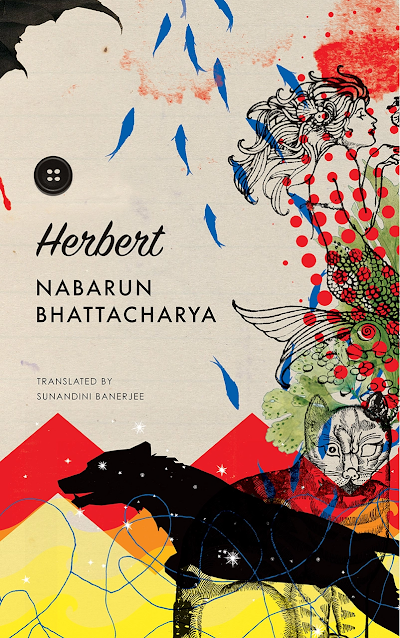
Herbert
by Nabarun Bhattacharya
Translated from the Bengali by Sunandini Banerjee


Coming Soon...

Wildfire
And Other Stories
by Banaphool
Translated from the Bengali by Somnath Zutshi


Coming Soon...

Aranyak
Of the Forest
by Bibhutibhushan Bandyopadhyay
Translated from the Bengali by Rimli Bhattacharya


Coming Soon...

Wolves and Other Stories
by Bhuwaneshwar
Translated from the Bengali by Saudamini Deo


Coming Soon...

The Open-Winged Scorpion and Other Stories
by Abul Bashar
Translated from the Bengali by Epsita Halder, with Sunandini Banerjee


Sunday, August 8, 2021

Coming Soon...

Khwabnama 
by Akhteruzzaman Elias  
Translated from the Bengali by Arunava Sinha


Friday, January 8, 2021

Coming Soon...

The Runaway Boy (Chandal Jibon Trilogy)
by Manoranjan Byapari  
Translated from the Bengali by V. Ramaswamy


Monday, April 6, 2020

Coming Soon...

Mirror of the Darkest Night
by Mahasweta Devi
Translated from the Bengali by Shamya Dasgupta


Coming Soon...

Breast Stories
by Mahasweta Devi
Translated from the Bengali by Gayatri Chakravorty Spivak


Coming Soon...

The Queen of Jhansi
by Mahasweta Devi
Translated from the Bengali by Sagaree Sengupta and Mandira Sengupta


Thursday, February 13, 2020

Heart of a Terror

The novel starts on the 40th birthday of Lovely, the eldest daughter of Farida Khanam and Mukhles Shaheb. Lovely is out on the market, all alone, and we soon find out, this is the most unexpected thing Farida Khanam could allow, to break a rule, to any of her daughters – Lovely, and Beauty. Filled with both excitement and joy, Lovely visits the market to buy a shawl, however a terror is lurking in her psyche, just like the voice in her head. She has to return home at a particular time, but she doesn't make it. There is a world of shame, guilt, terror, and lovelessness inside Lovely. At home, Farida Khanam is eagerly waiting for her daughter to arrive on time, and when she doesn't, the dark secrets, failures and guilt all unravel themselves inside her – she looks like a captain of ship that is about to sink. Beauty has her own distorted life. Mukhles Shaheb, whose health is not in a good state, is like a shadow living in the house, with no voice, no authority, but only the presence.


As the novel progress, a dark story of the family comes to full view. If we think to be a part of it, a terror runs through our bodies. Of course, people are taking care of each other, but freedom of the daughters is at stake. The family has become a living prison with its own set of rules. Farida Khanam, the mother, who believes has kept the family alive has already destroyed it, but she is not ruthless by heart; she just can't change; she cannot be weak; she has tried her best not to harm her daughters and but something else has been concocted in all this long years… until she makes up her mind to reveal a secret to their daughters, however something dreadful happens in the story, and we don't want to know what happens next; the complexity and darkness of the drama is hard to live on, we just want to run away from the characters. The mental burden they all have been living with, and the torture each of them have been inflicting on each other – this engulfs us. This is the power of the story – to make you feel what characters feel and live. I think HellFire has achieved it. This is one of the best Family Thriller I've read in years.


Author: Leesa Gazi
Translator: Shabnam Nadiya
Publisher: Eka, Westland Publications Pvt. Ltd.

Saturday, October 26, 2019

Coming Soon...

Beloved Rongomala, A Novel
by Shaheen Akhtar
Translated from the Bengali by Shabnam Nadiya


Freedom to Fall Back

The story starts when a man from the village returns from the closest market town with the news of the army’s arrival – a nationwide phenomenon spurred by the events taking place in Dhaka after March 1971 (the year of Bangladesh Liberation War) to suppress or even eliminate the supporters of the liberation of Bangladesh from Pakistani regime. With no visible liberationist leaders in the village, Akmal Pradhan, a village bourgeois tries to strengthen his influence over the villagers outwitting Ramjan Sheikh, another man who has many followers behind his back. Both of them try to prove themselves as a savior in case the army launches its rage against the villagers. Pradhan – though he isn’t sure of his actions or thoughts on how the army may react upon their arrival – arranges to set some nationalistic tone1 in the village that may reassure the military about the blamelessness of the village, all done to harvest power in his own favor. Pradhan holds grudge against Hares Master, the village leader of liberationist, who didn’t allow him to hoist the Pakistani flag, and is therefore ready to blame him for all the anti-Pakistan movements once the army arrives. 

1. It made no difference if one learned nothing else. He was realizing in his bones right now how important it was for students to learn the national anthem. And everyone should keep a flag at home. It didn’t matter if the house had no rice, or no cooking oil. But to not have a flag, that made a difference. For instance, if they had been able to fly a Pakistani flag right now from every house in the village, how happy that would make the army when they arrived.


Kobej, Pradhan’s ever furious right-hand, is a reliable man but difficult to understand and be appeased who is easily offended and don’t care much about anything happening around him or rather is disgusted by them. Pradhan wants Kobej to finish off Ramjan, luring him with money and land, so that he doesn’t have to struggle for power anymore in the wake of army’s arrival. However, Kobej doesn’t rush into the action, and though he doesn’t understand much of anything, his questions and doubts over the ways the village is prepared for the military’s arrival surprises Pradhan. Kobej is ready to kill Ramjan, but only at the right moment and circumstances. 

The army arrives in the village and sets up a camp. The army officer is not so much pleased by Pradhan and Ramjan’s procession or greeting and makes his intention clear why they are there, showing eternal disdain for Bengalis. Another arrangement by Pradhan to please the army ends up taking a life of assistant headmaster and creates a backlash for himself. In the following days, Ramjan gains praises from the officer and Pradhan presses Kobej to deal with him before things are out of hand. Meanwhile, the army kills all those people in the village suggested by Pradhan and Ramjan who witness and agree to the illogic and savagery of the army officer, who claims every one ever related to liberation as an infidel and Hindu and therefore punishable. However, Kobej is dissatisfied and unsettled by the killings, arson and atrocity2 led by the army. Kobej never understood Joy Bangla and about liberated Bangladesh before, but now he looks for answers in this heightened injustice so apparent, which has enraged him further, and motivated too to kill Ramjan, which he finally does following the aftermath of death of two soldiers before fleeing the village and joining mukti bahini, the liberation army. 

2. When the shooting stopped, the noise of weeping reached the officer’s ears. In a somber voice he asked, ”Why are people crying? Are they mourning these dead kafirs?” After a long silence, Akmal Pradhan spoke up. “No, no. They have no grief for those kafirs. No, they’re crying out of fear.”

Towards the culmination of the liberation war and the novel, Kobej returns to the village and wants to take revenge against Pradhan only to find that he has already fled. The surrender of the Pakistani army brings the struggle to an end with the creation of Bangladesh. Following this, Kobej and Hares Master are left in uncertainty without place to live and source of income, meanwhile Kobej’s rage flares up again when he finds himself in the midst of odd outcomes for his contribution. His dream to be a free man looks remote seeing undeserving impostors taking control over the power and properties, again leaving him to his misery and uselessness just as he was in before, and the circumstances therefore lead Kobej to return again as a mercenary to Pradhan, who rises to power. 

Set in the backdrop of Bangladeshi liberation war of 1971, The Mercenary is a novel which dramatizes how politically liberated Bangladesh and its inner roots fell again in the hand of landlords and powerful people, who took advantage of the political upheaval in favor of their own personal revenge and for gaining the authority that yet keeps people away from personal freedom and justice. The crumbling virtuousness, the moral degradation and the hopeless defiance facing the power capable of whimsical persecution is accounted in the story. The novel sheds light on the hidden and forgotten faces, and the scars and sacrifices left behind in the wake of the independence – which was not so easily earned and not so well protected from the opportunists – and satires the nationalistic and religious fanaticism that accounted for death tolls of the ignorant and weak. We’re left with the question – Does politically liberating a country guarantee the freedom to common people?

The book is part of Library of Bangladesh series.

Author: Moinul Ahsan Saber
Translator: Shabnam Nadiya
Editor: Arunava Sinha
Publisher: Bengal Lights Books (Library of Bangladesh series)
Page Count: 152pp
Price: $11

Author Photo Credit: https://en.m.wikipedia.org/wiki/Moinul_Ahsan_Saber 
Review Copy Courtesy: Bengal Lights Books (Library of Bangladesh series)

Darkness Within

The novel starts with the daily rituals of the women in brothel of Golapipatti one morning. Amidst the buzzing of curse words, arguments and yells coming from several rooms and those filling the lane, people responsible for bringing the water and supplies are doing their chores, and some customers from the night before still haven’t left. There are women who take in high paying customers, like Jahanara and Bokul, and have money to spend on meals, make-up and liquors, and there are some like Kusum, who are owned by pimps and goons, and go hungry for days if they don’t get enough customers1. Jealousy and envy among the girls is quite common and sometimes it turns into bloody fight, like between Shanti and Bokul over a customer of the latter. Many of them live in shared rooms and take the customers, in the same room after the evening falls, in turn. The setting of the novel perfectly captures the minutiae of the brothel: drab, dark and dingy rooms getting feeble light, dirty drain running along the lane, the decrepit structures, flaking walls and broken utensils. And the idiosyncratic obscene language exemplifies the moods and mindset of the girls in such a place.

1.       Not getting a customer means heartless humiliation at the owner’s hands On top of which there’s fear and hunger – the same hunger which most of the girls here have fallen victim to and ended up, willingly or unwillingly, as nothing but bodies in the decrepit rooms in this lane where no sunlight or air gets in, eaten away by commercial deals every day, like slaves traded thousands of years ago, amidst cruel, ruthless, inhuman behavior, surviving as creatures of the night.


When a man with inexplicable interests comes to visit Jahanara – who unlike many others don’t have to pose on the lane and lure customers, and has her own pimp and a woman who works for her – and asks how happy she is and presents his doubts about her future, she throws him out; however he leaves a lasting impression which would later unsettle her. Yasmin, an educated girl who was once honored by the government as Birangona after the war of liberation, during which she was raped and her family was murdered, threw herself as a sex-worker, as a revolt against the atrocities which she had to suffer just after the liberation. She takes customers only when she wants and is pensive about the teenage girls and women who trade their bodies for living in the brothel and is revered by some and others are disgusted by her waywardness. In similar way, all the women and girls we come across have their own personal backstories, which led them to the brothel: girls who are castaways of the liberation war of 1971, victim of famine, abduction and Hindu-Muslim riots, sold off by the relatives, those who could find no means to live and support their family in ordinary ways…

There are people who own the girls, to whom they owe their earnings and their life depends on customers – it seems, they have nothing to call their own, certainly not their bodies, except a tormented, unhappy and famished life which they have to sustain somehow. All of them know what they are into and what might come out of this, still they have no option to get out of this entrap. Meanwhile, some ignorant and innocent girls have already started dreaming of becoming an elegant prostitute who would visit the customers in luxury cars. In the brothel, it doesn’t take long for things to settle, whether it is a quarrel, a fight, a girl being beaten by her owner, a girl being whipped by a customer; Mashi, who looks after the business and girls, knows ways of the men who visit the brothel and under what rules the girls must be kept under, so, girls have to take customers after the evening falls, must attract them with vulgar gestures and talks and keep paying the owners, room rent and go on living. Their life is restricted within the rooms and the lane; the shops are close by, from where they can buy daily necessities like birth-control pills which they must be able to afford anyhow if not food. Almost everyone is afraid of the future, when they might not get customers at all, or may die of disease or hunger, and are threatened by the fate of Rohimon and the old Golapjaan – hungry and retired old prostitutes – who roam around the brothel scavenging food and asking for money.

One day, a journalist named Delwar visits Yasmin, he is the same man who visited Jahanara before. But this time, he has long conversation2 with Yasmin, who has many doubts and questions about their plight and unlike Jahanara, she is not offended. Yasmin tries to impart her revolting thoughts to other girls, nevertheless, they are confirmed that brothels aren’t going to close down and believe that they are never going to leave the profession3, for they’ll have no acceptance outside the place. When a heavy rain strikes the brothel, the roofs leak and the rooms are flooded. And in the meantime, it also brings a tragedy in the brothel which is soon forgotten amid the necessity of trading and bargaining the bodies without a moment to pity for personal miseries or dwell upon their collective suffering; even incidents of death are to be forgotten. The range of characters like Jahanara, Moyna, Kanchan, Bokul, Mashi, Zarina, Shanti, Kusum, Kalu, Parul, Piru, Hiru, Marjina, Huree and many others, depict harrowing and horrendous life of sex-workers. And, as the story progresses, we witness how fragile their lives are, with life and death of the girls resting under the choice and tyranny of the owners.

2.       Who are the people in this society? Are those who visit whores to buy their own arousal not part of the society? Are those who pay extra to take away beautiful prostitutes in their cars not part of society? Are those who extort money from us to get us our licenses not part of society either? What happens when that money is converted to government earnings and served on every plate?
3.       But they do not know where to find the unbarred door that will let them stand up for their rights as humans. They do not know how to pass through that door.

Inspired and urged both by the incidents the author witnessed as a child and later through the story featured in a magazine, and written in the time when she couldn’t visit the brothel herself firsthand, Letters of Blood is a daring and genuine work representing the bare and bottom truth behind the woes of the sex-workers in Bangladesh, who are under-represented in the mainstream of rights, acts and talks. The coarse realities of the prostitutes have been sharply portrayed without marring the emotional subtlety and sensitivity of the subject and characters, and some descriptions are visually so much appealing and transporting, as if the brothel has been laid inside out. Deftly translated by Arunava Sinha from the Bengali, Letters of Blood is a bold timeless classic that shows the prowess of Rizia Rahman.

The book is part of Library of Bangladesh series.

Author: Rizia Rahman
Translator: Arunava Sinha
Publisher: Bengal Lights Books (Library of Bangladesh series)
Page Count: 116pp
Price: $11

Author Photo Credit: https://www.deshebideshe.com/wiw/details/392
Review Copy Courtesy: Bengal Lights Books (Library of Bangladesh series)

Remembrance of 1971

Blue Venom

In the backdrop of first few days of Bangladeshi liberation war of 1971, a resident of Dacca, Nazrul is apprehended by the soldiers loyal to Pakistani government, on his way to meet his family – away from the violence in the city. And what at first seems to be a decent interrogation soon turns into brutal and inexplicable sequence of questions, which clearly carry the sentiments of religious hatred for Hindus and the violence against Bengalis demanding a free state.


The interrogators question him about his small movements in the city before the declaration of independence on March 26, 1971. Amidst his fear and trembling, he gets the clue that the interrogators are seeking his association1 with the liberation movement and revolutionaries. He tries to make a way out with simple truths and lies, even exaggerating other people’s activities in the hope of being freed. And he is scared from the way the interrogators with nationalistic virtues are trying to prove that he is guilty for supporting or acting as a liberationist – questioning even his natural instincts – and what his answers might lead him into. Meanwhile, he doesn’t understand why he’s being treated as if he is a poet who has written rebellious poems in support of the independent Bangladeshi nation. Only when a piece of paper that was found in his pocket containing a poem by Kazi Nazrul Islam, the national poet of Bangladesh, is brought upon he does realize that the soldiers have mistaken him with the poet, when in fact he only shares the same name and even doesn’t know how to write a poem.

1.       “… I neither understand nor enjoy politics. I didn’t even vote during the elections, because I was down with fever. I try to steer clear of marches or strikes because I don’t want to get shot. I can’t stand the sight of blood, which is why I did not opt for the medical profession after passing the ISC. I can’t think beyond my family and that’s why I was afraid.”

He is beaten and tortured when he doesn’t accept to identify as the poet and tries to prove his disassociation with politics. Later, a statement is brought to him that addresses the Bengalis and requests them to quit the liberation movement and to be undersigned by the poet Kazi Nazrul Islam, which he refuses to do. In his captivity, he has visions of his first love, his wife and children speaking to him and even the poet Nazrul Islam appears as if in a phantasmagoria, all of which strengthen his courage and true inner motivation for liberation. Nazrul, at first encounters with his interrogators and torturers asks if he will be able to go back to his family, however he transforms into a fervent supporter of liberation movement and sheds all his fear for life which later brings upon him the tragedy.

The novella captures small movements, acts and language of the characters that renders the ambience and tension surrounding the liberation movement, and exemplifies the brutality and defiance in the face of Bangladeshi war of independence. Blue Venom is not only a remembrance to the liberation war but also to poet Nazrul Islam who backed up the rebellion through his poems. Simple but dark and honest account of ordinary citizens suffering the brutality of regime, Blue Venom is a poignant reminder that liberation was attained not at ordinary cost.

Forbidden Incense

The story starts with a train coming to a halt before reaching Jaleswari at Nabagram station. Boarded in the train is Bilkis, who has come from Dacca to meet her mother and siblings in Jaleswari. In almost a godforsaken station, Bilkis tries to find out if the train will ever go to Jaleswari, but soon witnesses it returning back to another station marring her last hope. Then after having a conversation with the stationmaster about the tension in the area between the people and soldiers, Bilkis starts her journey on foot for Jaleswari. Soon she finds out that a teenage boy whom she had seen before at the station is following her. As they progress on their journey, the conversation with the boy leads her to discover that the family of the boy had been killed by the Biharis and that he knows her family well. The boy had escaped from the village when the Hindus were slaughtered and doesn’t exactly know what’s happening in the village and the apprehension of Bilkis grows and so is the urgency to reach her village having already lost (?) her husband in one of the violent attacks raging nationwide.

After reaching Jaleswari Bilkis and Siraj (the boy) find that Bilkis’ house – where everything looks like as if things were left in a hurry – and the neighborhood too is empty. Bilkis searches for traces of any killings while Siraj ventures outside to search for any news, both wary of their movements and taking care to avoid any attention. Siraj brings the news that all of her family is safe and have crossed a river to a safe place, and shortly they leave the house. They come to a house of an old blind man, who has been left by all and now is at the mercy of Biharis. When the old man finally speaks to Bilkis, a truth yet kept secret by Siraj surfaces – Bilkis’ brother was killed among many young boys. The story progresses as both of them venture out again and decide to give proper burial to the victim of genocide until they face the infiltrators themselves.

Like Blue Venom, Forbidden Incense too is a story woven around the Bangladeshi war of independence, when mass killings, displacement, torture and rape were among the atrocities suffered by the common people. The novella delves deep into the psyche of people facing the violence and their struggle for life and safety and foremost the never-ending connection between those who are living and those lost forever. The heartbreaking scenes of killings, dead bodies and tortures make us surprised to feel and understand to what extent human beings can become evil, corrupt and animalistic in the face of war. Combined, the novellas give a true account of humane and inhuman stories resting in the shadow of Bangladeshi war of independence.


The book is part of Library of Bangladesh series.

Author: Syed Shamsul Haq
Translated by: Saugata Ghosh
Edited by: Arunava Sinha
Publisher: Bengal Lights Books (Library of Bangladesh series)
Page Count: 124pp
Price: $11

Author Photo Credit: https://en.wikipedia.org/wiki/Syed_Shamsul_Haque
Review Copy Courtesy: Bengal Lights Books (Library of Bangladesh series)

(Coming Soon…)

Coming Soon...

Twelve Stories
by Hasan Azizul Huq
Translated from the Bengali by Bhaskar Chattopadhyay


The Seekers - A Quest to the Questions

The Seekers is a one-of-a-kind story collection by Gautamiputra Kamble. Originally published in Marathi in 2004, the collection is translat...